



Why Is Starlink Internet Slow or Intermittent?
Whether you’re streaming a video, taking part in a video call, playing games online or just browsing the Internet, slow Starlink speeds means you’ll get a lot of low-quality videos when streaming, buffering and even temporary disconnects.
When you’re experiencing slow and unreliable Starlink internet speeds, you have to troubleshoot the issue and solve it. This article shares the most common fixes for slow Starlink and getting back that high-speed connection you’re paying for.
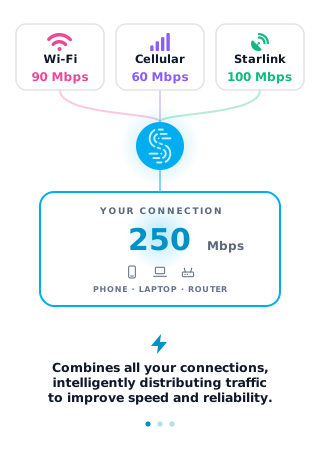
Speedify bonds Starlink with cellular or cable — so you get both connections' speed at once.
From 6,228 Starlink users on Speedify, 71% ran at least one other connection alongside Starlink. Cellular is the most common addition — and with Speedify bonding, you get the combined bandwidth of both.
Typical bonded speed gains
Top 8 Reasons for Slow Starlink Speeds
If you’re wondering why you get slow Starlink internet, here are the top reasons for that:
- Network congestion during peak hours
- Many users notice speeds plummet between 6–11 PM local time, when local demand surges.
- Starlink’s prioritization means RV/mobile users often drop to residual bandwidth.
- Trees, buildings, and snow can disrupt line-of-sight, significantly harming performance.
- Significant weather like heavy precipitation, wind, or ice can block satellite signals or destabilize the dish.
- Users report outages lasting from 15 to 60 minutes during major storms.
- Damaged cables, defective routers, or “stuck” motors on older dish models can degrade speeds.
- Some users received new gear after support diagnosed a hardware issue.
- Starlink’s Wi‑Fi range may be insufficient for larger homes; poor placement and walls reduce signal strength.
- Heavy traffic from multiple devices (smart TVs, cameras, phones) divides bandwidth.
- Incorrect DNS, IP settings or using slow third-party equipment like routers and other networking devices can throttle performance.
- Delayed firmware/app updates can cause instability or slower speeds; regular reboots often help.
- Users on Roam/RV plans notice dramatic slowdowns because residential users get priority bandwidth.
10 Steps to Troubleshoot Slow Starlink Internet
How can you increase your Starlink speeds? Here are the top steps you should try to get faster Starlink speeds:
-
Check for obstructions and relocate the dish if necessary
- Use the Starlink App → “Check for Obstructions”
Follow the guided experience and make sure your Starlink’s field of view is clear. - Relocate or raise the dish if trees, buildings, chimneys, etc. block the view.
- Seasonal issue: foliage in summer and sometimes snow in winter causes new obstructions.
-
Restart everything to clear minor software or routing bugs
- Unplug your Starlink dish, router, and any third-party networking gear.
- Wait 2–3 minutes, then plug everything back in.
-
Test internet speeds at different times of day to see if it’s network congestion
- Run speed tests using the Starlink app or fast.com.
- Compare results during:
- Early morning
- Midday
- Peak hours (6–11 PM)
- If speed only drops at night, network congestion is likely the issue.
-
Update firmware and app
- Open the Starlink app and check for software updates.
- Ensure your router and any third-party devices are on the latest firmware.
- Some speed issues are fixed in firmware patches (especially older Gen 1 dishes).
-
Switch to Ethernet (if possible) to eliminate Wi-Fi signal issues
- Use the Starlink Ethernet Adapter to connect your device to the internet using wired Ethernet. This is particularly useful for PCs or streaming devices.
- This bypasses potential Wi‑Fi interference, signal loss, or slow internal routers.
-
Reposition your Wi‑Fi router to improve Wi-Fi signal
- Place it in a central, elevated spot — not behind a TV or in a cabinet.
- Avoid thick walls, metal surfaces, or microwaves nearby.
- Consider using a mesh Wi‑Fi system or extender for large homes.
-
Reduce device load
- Disconnect idle or high-usage devices (e.g. security cams, smart TVs).
- Pause downloads/updates and see if speeds improve.
- Use Quality of Service (QoS) settings if using a third-party router.
-
Check for deprioritization (depending on your plan type)
- Are you on Starlink Roam (RV) or Basic Mobile? These are always deprioritized.
- Residential and Mobile Priority customers get better speeds.
- Consider upgrading if you’re experiencing consistent slowdowns in crowded areas.
-
Review DNS and network settings
- Change DNS to a faster resolver:
- Google DNS: 8.8.8.8, 8.8.4.4
- Cloudflare: 1.1.1.1
- Restart your router after changes.
-
Contact Starlink Support
- If issues persist and you’ve ruled out local causes:
- Use the Starlink app → Support → Troubleshoot tool.
- Submit a ticket if hardware seems faulty (e.g. dish not rotating, no connectivity, snow buildup).
- Users report replacements or support help with degraded performance.
Why Does Starlink Lag so Much?
Starlink lag can be caused by several factors that affect satellite internet performance:
- Satellite distance – Even low Earth orbit satellites are 340+ miles away, creating inherent latency that’s higher than terrestrial broadband connections.
- Network congestion – High user density in your area can overwhelm local satellite capacity, causing slowdowns during peak usage times, especially between 6-11 PM local time.
- Weather interference – Heavy rain, snow, or storms can disrupt satellite signals, leading to increased latency and connection drops.
- Obstructions – Trees, buildings, or other objects blocking your dish’s view create intermittent connectivity issues and lag spikes.
- Equipment issues – Overheating, outdated firmware, or hardware problems with your Starlink kit can contribute to performance degradation.
- Ground station distance – Your connection routes through the nearest ground station, and greater distances can increase overall latency.
How Do I Boost My Starlink Signal?
To boost your Starlink signal strength and improve connectivity, implement these optimization techniques:
- Clear all obstructions – Remove trees, branches, and debris blocking your dish’s view. Even partial obstructions can significantly weaken signal strength.
- Elevate your dish – Mount the antenna as high as possible on your roof or a pole to minimize interference from surrounding obstacles.
- Use the Starlink app – Regularly check the obstruction view feature to identify and address signal-blocking objects in your coverage area.
- Proper dish positioning – Ensure your dish is level and properly oriented. Let the system auto-adjust rather than manually positioning it.
- Clean your dish regularly – Remove snow, ice, dirt, and debris that can block or reflect satellite signals, especially during harsh weather conditions.
- Check cable connections – Ensure all cables are securely connected and undamaged, as loose connections can cause signal degradation.
Will Starlink Get Better Over Time?
Yes, Starlink is expected to improve significantly as SpaceX continues expanding and upgrading the constellation:
- More satellites – SpaceX plans to deploy over 40,000 satellites, dramatically increasing coverage density and reducing congestion in high-traffic areas.
- Advanced technology – Newer satellite generations feature improved hardware, better power efficiency, and enhanced signal processing capabilities for faster speeds.
- Reduced latency – Additional satellites and inter-satellite laser links will create shorter routing paths, decreasing ping times for gaming and real-time applications.
- Better coverage – Expanded polar and equatorial coverage will eliminate dead zones and provide more consistent service worldwide.
- Software updates – Regular firmware improvements optimize performance, fix bugs, and add new features to enhance user experience.
- Ground infrastructure – More ground stations and improved network routing will reduce bottlenecks and improve overall system reliability.
Is There a Wi-Fi Booster for Starlink?
You can enhance your Starlink Wi-Fi coverage using various signal boosting solutions:
- Starlink mesh nodes – SpaceX offers Starlink Mesh, the official mesh extender designed specifically for their router, providing seamless coverage expansion throughout your property.
- Third-party mesh systems – Popular systems like Eero, Google Nest, or Orbi can replace Starlink’s router entirely for better Wi-Fi performance and coverage.
- Wi-Fi extenders – Traditional range extenders can boost signal to dead zones, though they may reduce speeds compared to mesh solutions.
- Ethernet mode setup – Connect your own high-performance router via Ethernet for superior Wi-Fi coverage and advanced networking features.
- Powerline adapters – Extend internet access through electrical wiring to remote areas where Wi-Fi signals can’t reach effectively.
- External antennas – Some users install high-gain antennas to improve Wi-Fi range, especially for outdoor coverage needs.
Where is the Best Place to Put a Starlink Router in Your House?
Optimal Starlink router placement maximizes Wi-Fi coverage and performance throughout your home:
- Central location – Position the router in the middle of your house, preferably on the main floor, to ensure even signal distribution to all rooms.
- Elevated position – Place the router on a shelf, desk, or mount it on a wall at least 3-6 feet off the ground for better signal propagation.
- Away from interference – Keep the router distant from microwaves, baby monitors, Bluetooth devices, and other electronics that operate on 2.4GHz frequencies.
- Open space – Avoid enclosed cabinets, closets, or metal furniture that can block Wi-Fi signals and reduce coverage effectiveness.
- Near heavy usage areas – Consider proximity to home offices, living rooms, or bedrooms where you use internet-connected devices most frequently.
- Adequate ventilation – Ensure proper airflow around the router to prevent overheating, which can cause performance throttling and connectivity issues.
Bonus Tip to Avoid Slow Starlink Speeds: Use a Secondary Connection Together with Your Starlink Internet
For the moments when your Starlink gets slow and unreliable, it’s better to be prepared in advance. You can use your smartphone’s mobile data or an older DSL line you have around together with your Starlink internet connection.
Channel bonding technology makes this possible – to combine two or more connections together at once – instead of just switching between them. This keeps your internet connection alive as long as one of the connections is running.
There are many implementations of channel bonding on the market, mostly for business and professional use. We recommend using Speedify for this – it’s the only app you can use straight on your devices to combine connections together. If you prefer a network bonding router to use with your Starlink, we recommend the Miri X510.
Alex and the Speedify team are always exploring the latest in networking and security technology—like 5G, 6G, WiFi 7, laser and satellite internet—and sharing it in new discussion content across YouTube, TikTok, Instagram, and LinkedIn every week.
Got a tech question? Let's go deeper! Pop into Speedify Office Hours live every Wednesday at 10 AM Eastern. Speedify CEO Alex Gizis and our network engineers are standing by to break down your questions about networks, tech updates, and Speedify features.


Speedify
Get started with Speedify today.
Combine Wi-Fi, 4G/5G cellular, Ethernet, Starlink, and more into one faster, steadier connection. Free to try — no credit card required.
🚀 Speed
Faster uploads and downloads by bonding all your connections at once.
📶 Stability
Automatic failover in under a second when any connection drops.
🔒 Security
AES-256 encryption on every connection, on every network you join.




15M+ downloads worldwide. 75K+ five-star reviews on iOS and Android.