

Use Speedify VPN to Watch the Artemis III Launch From Anywhere, Without Interruptions
Artemis III is the next crewed launch of NASA’s Moon rocket. Four astronauts will fly the Space Launch System and the Orion spacecraft from Kennedy Space Center in Florida, but this flight stays in Earth orbit: the crew will test rendezvous and docking with the commercial lunar landers from SpaceX and Blue Origin, ahead of the Artemis IV Moon landing NASA plans for 2028 (NASA Artemis III mission page). NASA is targeting 2027 and has not set a launch date yet. NASA+ streams NASA launches free, with no subscription and no ads.
Speedify keeps the stream running when the moment matters
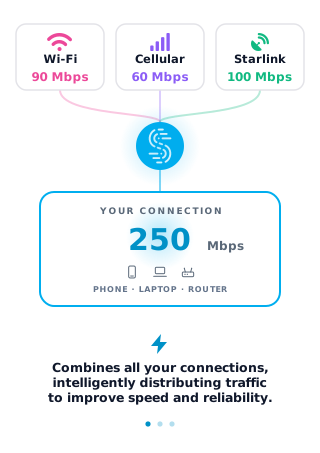
A launch window happens once. Speedify is an app that combines Wi-Fi, 4G/5G cellular, Ethernet, Starlink and satellite internet connections at the same time and encrypts your traffic like a VPN, so the countdown can keep running at T minus ten seconds when one connection drops.
The free options are all here, from NASA+ and NASA’s YouTube channel to the news channels that covered Artemis II, together with what using Speedify gets you on launch day. Artemis II, the launch most searches still ask about, already flew in April 2026 and streamed live on NASA’s YouTube channel; this guide covers the next one, Artemis III. A steadier stream with Speedify needs two or more internet connections, such as home Wi-Fi plus your phone’s 4G/5G cellular; on a single connection, Speedify works as an encrypted VPN, can be a little slower and cannot stop that connection from dropping.
Where to Watch the Artemis III Launch Live for Free
Artemis III does not have a launch date yet. NASA says it is targeting 2027 (NASA). In September 2026, NASA Administrator Jared Isaacman told staff the best case was a launch in summer 2027, and that the program was running about 90 days behind that schedule (Isaacman’s note, via NASA Watch). Expect the date to move, and check NASA’s live coverage page for the confirmed date and start times closer to launch.
NASA streams its crewed launches free on its own channels, but some regional broadcast streams may be geo-restricted if you’re traveling or outside your home country. Here’s where to watch based on your location.
Watching Artemis III in the United States: NASA+ is NASA’s free streaming service, with no subscription and no ads (NASA’s ways to watch). NASA also streams launches on its YouTube channel, Facebook page, Twitch and X account, and lists upcoming broadcasts on its live coverage page. NASA has retired the old NASA TV cable channel, so NASA+ and NASA’s YouTube channel are where the official broadcast lives now. For Artemis II, NASA’s YouTube stream started with rocket fueling on launch morning, hours before liftoff. US networks such as CBS ran special live coverage of the Artemis II launch; network plans for Artemis III have not been announced.
Watching Artemis III from the United Kingdom: NASA+ and NASA’s YouTube channel work in the UK with no geo-restrictions, so they are the simplest free way to watch NASA launches from the UK. For Artemis II, the BBC News Channel carried live coverage, also streamed on BBC iPlayer (watching live TV on iPlayer requires a UK TV licence), and Sky News streamed the launch free on its website and app. UK coverage of Artemis III has not been announced, so check their schedules closer to launch day.
Watching Artemis III from Europe: European Space Agency astronaut Luca Parmitano, from Italy, flies as the Artemis III pilot (NASA crew announcement), and ESA builds the European Service Module that powers Orion. Pan-European channels such as Euronews and France 24 cover major space news, but no European broadcaster has announced Artemis III coverage yet. NASA’s own streams are the safest option.
Watching Artemis III from Canada: Artemis II carried Canadian astronaut Jeremy Hansen around the Moon. The Artemis III crew, named by NASA on June 9, 2026, is commander Randy Bresnik, pilot Luca Parmitano of ESA, and mission specialists Frank Rubio and Andre Douglas, so there is no Canadian on board this time. NASA’s own streams, NASA+ and NASA’s YouTube channel, are available in Canada with no geo-restrictions.
Watching Artemis III from Australia and Other Regions: NASA+ and NASA’s YouTube channel are available worldwide without geo-restrictions. Viewers anywhere can watch the full mission coverage for free through these official NASA channels.
The exception: regional broadcast streams from the BBC, Sky News or US networks may be limited to viewers in their home countries. If you’re traveling, Speedify can connect you through a server in your home country so you can reach the services you already use there, and it helps keep your connection stable for the entire broadcast. Check each broadcaster’s terms before you rely on it.
Speedify Keeps Your Launch Stream Stable
Speedify does more than change your IP address. Unlike a traditional VPN, it also protects your live stream, so one slow or dropped internet connection does not have to stop the stream at the moments that matter most. Here’s why Speedify does better than a traditional VPN for watching a live launch.
Speedify Uses Technology That Combines Internet Connections: the app runs Wi-Fi, 4G/5G cellular, Ethernet, Starlink and satellite internet connections at the same time for a more reliable, secure connection with faster downloads and uploads, including for streaming.
Speedify Makes Video Streams Better: Traditional VPNs often slow down your internet speeds, causing frustrating buffering during the moments when you most want to be watching. With two or more internet connections, Speedify improves streaming performance rather than degrading it. You’ll see faster load times, less buffering, and smoother playback, whether you’re watching the SLS engines ignite, the rocket clear the tower, or the Orion spacecraft separate from the upper stage.
Speedify Provides Reliable Internet that Doesn’t Break: A live rocket launch is a single event with no replay. With a traditional VPN, a dropped connection means you’ve missed the moment. Speedify’s automatic failover moves your stream to your other internet connection without dropping it, so you won’t miss liftoff, max-Q, booster separation, or Orion reaching orbit.
Speedify Monitors and Adjusts Your Connection in Real-Time: Live event streaming is vulnerable to packet loss, which causes pixelation and freezing at peak viewing moments. Speedify checks the latency and packet loss on each of your internet connections and moves traffic away from a connection that starts to struggle, so a weak Wi-Fi signal does not freeze the picture as the rocket clears the tower. Speedify works on your side of the stream; it cannot speed up a broadcaster’s overloaded servers.
Getting Started with Speedify: Steps to Watch the Artemis III Launch Online for Free
Setting up Speedify takes just a few minutes before launch day:
- Download Speedify for your device (available for Windows, Mac, iOS, Android, Linux and OpenWrt).
- In the Speedify app, open Servers and pick a nearby Speedify server. If you are traveling and want to watch through a service you already use at home, pick a server in your home country instead. NASA+ and NASA’s YouTube channel work worldwide, so they need no particular server.
- Connect to that server with Speedify.
- On the device you want to watch on (computer, laptop, tablet, iPhone or Android smartphone), go to your chosen broadcaster’s website or open their app.
- Start watching the Artemis III launch live, for free.
With Speedify, You Won’t Miss a Moment of the Artemis III Launch
With NASA’s free official streams and Speedify keeping your connection stable, you can watch the launch without a cable subscription and without interruptions.
Artemis II flew four astronauts around the Moon in April 2026, the first crewed flight beyond low Earth orbit since 1972. Its live video from the Moon arrived with a noticeable delay; here is why the Artemis broadcast lagged behind live. Artemis III is the test flight that has to go right before NASA tries to land astronauts on the Moon again on Artemis IV, planned for 2028. Whether you’re watching from across the street or across the world, Speedify helps keep your stream running when the SLS engines ignite.
Speedify
Get started with Speedify today.
Speedify combines Wi-Fi, 4G/5G cellular, Ethernet, Starlink and satellite into one faster, more reliable internet connection. Free to try: 5 GB a month with a free account. No credit card required.
🚀 Speed
Faster uploads and downloads, because Speedify uses all your internet connections at once.
📶 Stability
If one internet connection drops, Speedify moves your traffic to the others in milliseconds.
🔒 Security
AES-256 encryption on every internet connection, on any network you join.


15M+ downloads worldwide. 75K+ five-star reviews on iOS and Android.