

Dedicated, static, and shared get used as if they mean the same thing, and they don’t. The confusion is understandable, because a single IP address can be two of them at once. Sorting them out takes about two minutes, and it makes choosing the right setup much easier.
In this article you’ll find out the differences between them and how Speedify’s server infrastructure accommodates all three options so you can get the best performance depending on your needs as a business or as an individual.
Shared IP: one address, many people
Three terms get used as though they were interchangeable, and they are not. A shared IP is one address that many people connect through at the same time. A static IP is an address that does not change. A dedicated IP is an address that belongs to you alone – and an address can be dedicated without being static, or static without being dedicated.
Speedify is an app that combines several internet connections at once for faster, steadier internet, and its server options cover all three cases. Keep reading to see what each type actually does, how they compare side by side, and which Speedify server option gives you which.
Static IP: an address that doesn’t change
A static IP is simply an address that stays the same over time, rather than being reassigned periodically. The opposite is a dynamic IP, which your provider rotates whenever it feels like it. Static matters when something needs to find you at a predictable address: a server you host, a remote-access setup, or a firewall rule that trusts a specific number.
Here is the catch that trips people up. Static does not automatically mean private. An address can be static and still be shared among a small group of users. So “static” answers the question “does it change?” but not “is it only mine?” Speedify covers this distinction in its guide to NAT and static IP addresses.
Dedicated IP: an address that’s yours alone
A dedicated IP is assigned to one account and no one else. It answers the second question: yes, this address is only yours. In practice a dedicated IP is almost always static too, which is why the two terms get blurred. The distinction still matters, because the benefits people actually want, getting on a whitelist, fewer fraud flags, running a reachable service, come from the address being dedicated, not just from it being static.
A quick comparison between shared IP, static IP and dedicated IP
- Shared: used by many, often dynamic, best for blending in and general privacy.
- Static: doesn’t change, may still be shared, best when something needs to find you at a fixed address.
- Dedicated: yours alone and almost always static, best for whitelisting, consistent access, and a clean reputation.
How Speedify handles all three IP options with their servers
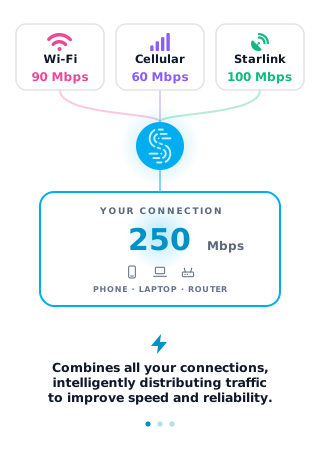
Speedify gives you a shared IP for free with every plan. Speedify uses channel bonding to combine Wi-Fi, 4G/5G cellular, Ethernet, Starlink and satellite into one connection that terminates on the shared Speedify network, across 50+ cities on six continents, which is the right choice for most everyday use.
When you need an IP address that is both static and dedicated, a Speedify Dedicated Server provides a static IPv4 address reserved for your account, along with up to 1 Gbps of throughput, 3TB of monthly bandwidth, and port forwarding. Speedify runs the server and backs it with a guaranteed service level agreement, so the dedicated IP arrives attached to a connection that is faster, more reliable, and more secure.
Get started with Speedify
Start with the free shared network by downloading Speedify, then add a Speedify Dedicated Server if you reach the point where you need a static, dedicated address of your own. See current options on the Speedify store.
Speedify
Get started with Speedify today.
Combine Wi-Fi, 4G/5G cellular, Ethernet, Starlink, and more into one faster, steadier connection. Free to try — no credit card required.
🚀 Speed
Faster uploads and downloads by bonding all your connections at once.
📶 Stability
Automatic failover in under a second when any connection drops.
🔒 Security
AES-256 encryption on every connection, on every network you join.


15M+ downloads worldwide. 75K+ five-star reviews on iOS and Android.