

Last week Ukraine’s military satellite terminals stopped working on anything moving faster than 100 miles an hour, but the outage wasn’t Starlink. Alex from Speedify explains why it was actually Starshield, the separate SpaceX constellation built for the US military, and why that distinction decides who controls the switch. He also gets into the part almost nobody noticed: ordinary Starlink … Read More
Watch Now: How We Ported Linux Software to QNX: The Real Time OS in 275 Million Cars

QNX runs in 275 million cars, and almost nobody who drives one has heard of it. Alex and Brian get into what it actually took to move Speedify onto a real-time operating system: why “real time” means guaranteed rather than fast, what happens when your process has to yield to the one controlling the brakes, and why porting from Linux … Read More
Watch Now: Why We Threw Out “Premature Optimization” for Rust and LLMs
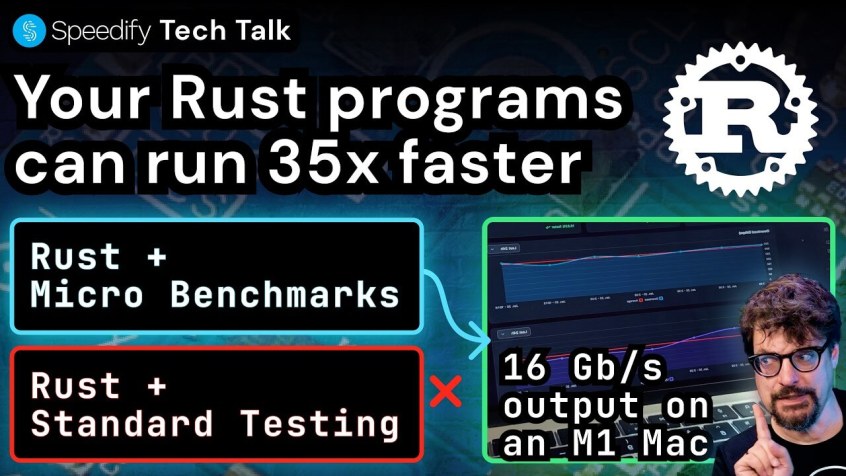
An old M1 Mac putting out 16 gigabits per second of packets, all built in Rust with LLM help. Alex and Brian from Speedify dig into how to actually get Claude to write the fastest Rust code possible, including why you should build your test harness in a completely separate LLM session (so the LLM doesn’t make the same bugs … Read More
Watch Now: Is 5G Too Slow for Self-Driving?

Nvidia says it has everything needed to build a self-driving car: GPUs and cameras onboard, racks more in the cloud. But where should the decision-making actually live? This episode digs into the real trade-offs behind autonomous vehicles – latency budgets for steering vs. route planning, Nvidia’s simulation stack for training without risking real roads, the industry landscape (Nvidia’s MediaTek partnership, … Read More
Watch Now: How did SpaceX use Linux on Consumer Chips to win the Space Race?
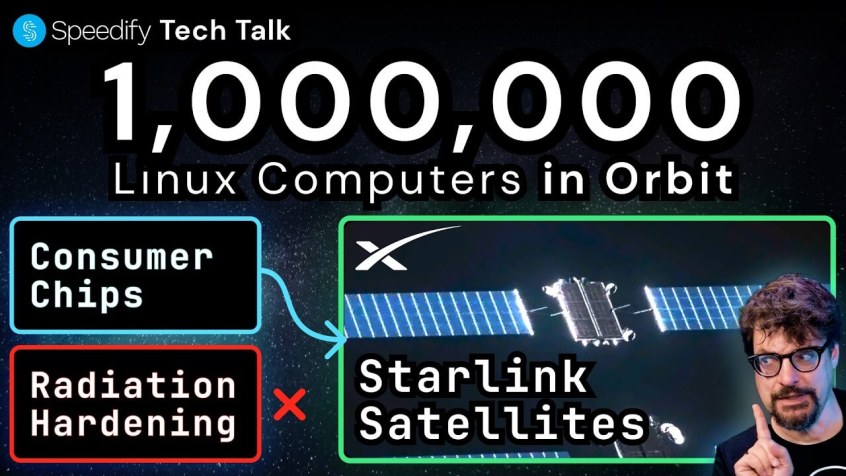
SpaceX skipped the $10,000 radiation-hardened chips that traditional aerospace has used for decades and put over a million consumer-grade Linux computers into orbit on Starlink satellites, and it worked. Consumer chips have their own flaws, though: Linux developers blame buggy Intel and AMD chips for crashes. Alex and Brian from Speedify break down how Starlink runs real-time Linux on commercial … Read More
Watch Now: QNX vs. Linux: What Makes an RTOS So Different?

Speedify engineers discuss what separates a Real-Time Operating System (RTOS) like QNX from general-purpose operating systems like Linux, Windows, and macOS. QNX powers automotive dashboards, medical devices, and industrial control systems where microsecond timing failures aren’t an option. Alex and Brian from Speedify break down: Microkernel vs monolithic kernel architecture: why QNX isolates failures that would crash Linux or Windows … Read More