

The Forgotten Band that Pioneered Internet Live Streaming
Severe Tire Damage (STD), a garage rock band that, despite having only 70 monthly listeners on Spotify today, played a revolutionary role in shaping how we consume live entertainment online.
Watch the video below from the Between Two Palms series and read the article to dint out how internet live streaming started and what the Rolling Stones connection is.
Speedify makes your uploads and downloads faster, more reliable, and more secure.
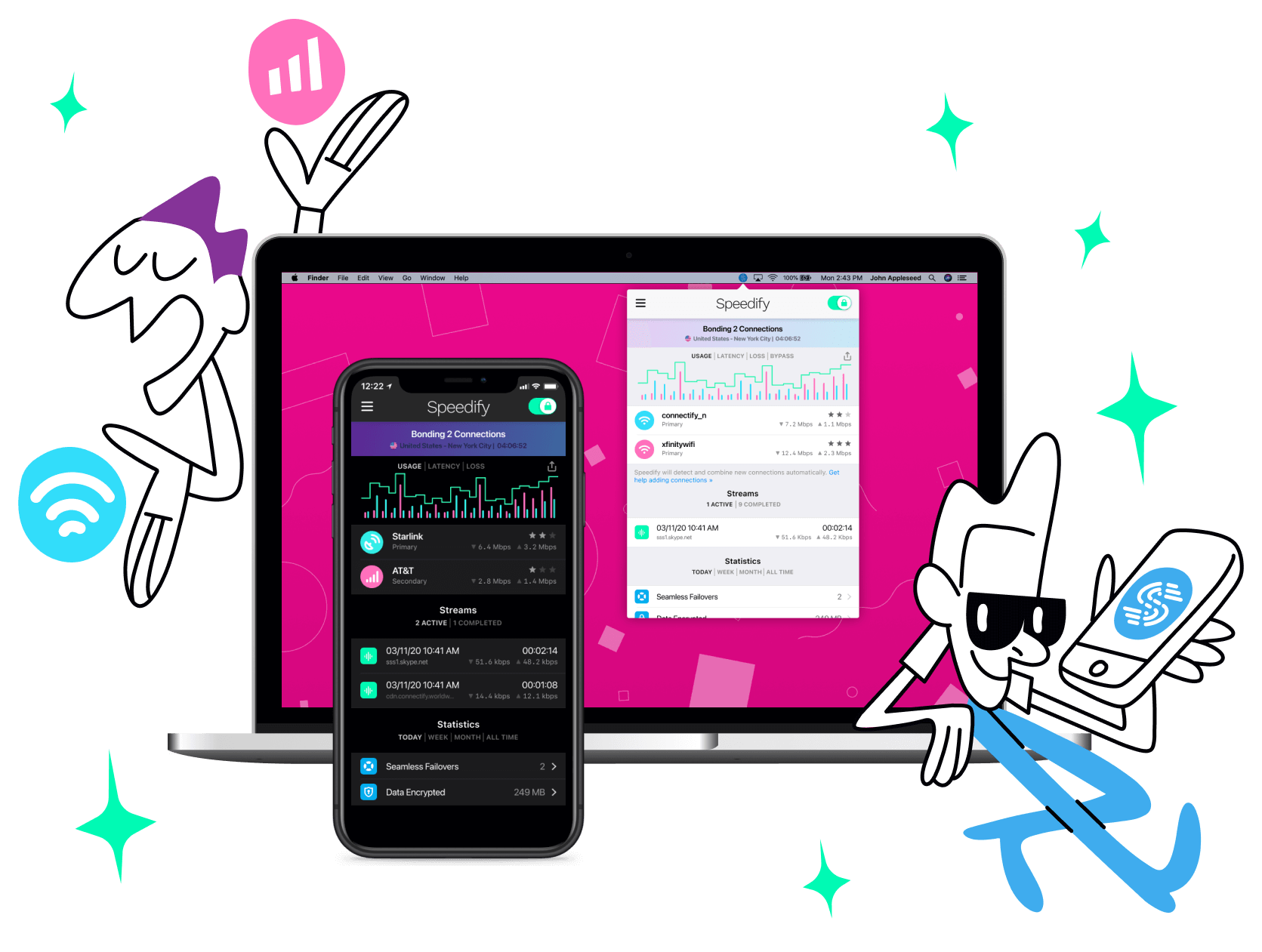
Speedify combines Wi-Fi, 4G / 5G cellular, Ethernet, Starlink, and other satellites for faster internet uploads and downloads
Speedify is the only software app that combines Wi-Fi, 4G / 5G cellular, Ethernet, Starlink and other satellites at once for secure, faster, and more reliable internet uploads and downloads so you stay online without interruptions.
Speedify will automatically detect and start using any available Internet connections on your device while intelligently distributing your online traffic between them for optimal performance. If you need help we have quick start guides available for most common set ups.
Speedify gets you faster uploads and downloads from the devices around you
Speedify's Pair & Share feature lets you and the devices around you pair up and share 4G/5G cellular both ways, so every paired device gets faster uploads, faster downloads, and a steadier internet connection. All sides share and use each other's cellular at once, unlike a personal hotspot, where one device gives and the rest take.
Speedify's Pair & Share feature runs over the local network between devices already running Speedify, with no extra hardware and no new data plans. Speedify creates an encrypted pool of shared 4G/5G cellular connections across all paired devices. Each device taps into that shared pool of combined connections for faster upload and download speeds and a more reliable internet connection.
See how you can use Speedify to combine different Internet connections:


T Zero of Internet Live Streaming
On June 24th, 1993, something extraordinary happened in the world of technology and music. Severe Tire Damage, a band composed of full-time employees from various California research labs, achieved what no one had done before: they performed the first-ever live concert streamed over the internet, combining both audio and video transmission.
The groundbreaking performance was made possible by a technology called MBone, an early live streaming solution that tackled one of the biggest challenges in video distribution: scale. MBone's innovation lay in its clever use of multicast technology, which revolutionized how content could be distributed to large audiences.
Instead of a single server struggling to send individual streams to each viewer, MBone created an efficient distribution tree. The main stream would be sent to local servers or internet service providers, who would then handle the distribution to individual viewers in their network. Think of it like sending one package to Verizon, and letting Verizon handle the delivery to all its customers, rather than shipping to each customer individually.
The Rolling Stones Connection
The success of Severe Tire Damage's pioneering stream caught the attention of none other than The Rolling Stones. In 1994, the legendary rock band decided to stream their own concert using MBone technology, with Severe Tire Damage opening the show. The event was massive by early internet standards – approximately 50,000 people tuned in, representing roughly a quarter of all internet users at the time.
The moment was immortalized by Mick Jagger's charmingly naive welcome to viewers who had "climbed into the internet tonight and got into the MBone," capturing the novelty and excitement of this emerging technology. Watch here a collection of news pieces from those times.
Evolution of Internet Live Streaming
While MBone represented a technological breakthrough, it ultimately didn't stand the test of time. Today's live streaming landscape looks vastly different, dominated by content delivery networks (CDNs) like Cloudflare and Akamai. Though the fundamental concept of efficient content distribution remains, the implementation has changed significantly.
The decline of MBone and similar multicast technologies wasn't due to technical limitations or lost knowledge – the code and documentation still exist. Rather, it was a combination of two main factors:
- Security Concerns: The ability to send data to multiple computers simultaneously, while efficient, raised security concerns. The potential for abuse (imagine someone sending unwanted content to every computer in an entire country) led to many multicast features being restricted.
- Changing Viewing Patterns: The early '90s vision of internet broadcasting assumed people would watch content like traditional TV, with large audiences tuning in to a limited number of channels simultaneously. Instead, we evolved toward a much more diverse and fragmented viewing landscape, with millions of concurrent streams serving smaller, dedicated audiences.
Internet Live Streaming Modern Challenges
While current live streaming technology has largely solved the problems MBone aimed to address, we still occasionally see the limitations of our modern infrastructure.
High-profile events like major sports championships or popular pay-per-view fights can sometimes overwhelm even the most robust content delivery networks, showing that the challenge of delivering live content to massive simultaneous audiences remains relevant.
The Legacy of Severe Tire Damage for Live Streaming
While the band may not have achieved lasting musical fame, their willingness to experiment with emerging technology helped lead the initiative for the live streaming we take for granted today.
From YouTube Live to Twitch, from virtual concerts to live sports streaming, the challenges that Severe Tire Damage and MBone tackled in 1993 continue to shape how we think about delivering live content to global audiences.

Connectivity Tech Discussions
Our Connectivity Tech Discussions Between Two Palms video series shines the spotlight on Alex and technical guests, diving deep into caonversations about the latest Internet technology, including Starlink satellite, WiFi 7, Apple, fiber optics, new routers, remote connectivity, and networking protocols.
Join us and let's talk tech!