

Social Security Checks and the COBOL Connection
Ryan: Rumors have been circling about millions of dead people receiving social security checks, but is that true?
Alex Gizis: It's not. There's been a lot of confusion, right? So Elon looked at the list and said, "Why are there all these 150 year olds in this database?" And then people went crazy, they subtracted 150 off today's date, they got 1875, and then they made up all these stories about how, well, 1875 is the default date for dates in COBOL.
It's not, there are no dates in COBOL. They said, "well, it's the default date from the ISO 8601 standard". It's not. They actually mentioned in the standard that there was a convention to decide the standards on dates back in 1875, but in no way is it date zero or date one in that standard.
It's not at all. So just an enormous amount of stuff was just kind of made up. And then finally they got the table basically of data that Elon Musk was looking at. And what he's looking at is that 150 to 159 is the last age where there's still more than a million people listed
But it tapers off, all the way down to showing one person who's somewhere between 360 and 369 years old in the database. So there isn't something special about 1875. There's just a lot of impossibly old people listed in this database. Especially when you realize that they only started giving out social security cards in 1936.
So someone from 1875, they would've been what, 56 then? But somebody who's 360 now would've been centuries dead before the first card was ever given out. So that's just bad data. Bad data got into the database somehow.
Use Speedify to increase your upload and download speeds: combine internet connection sources like Wi-Fi, 4G, 5G, Starlink and wired broadband

Combine Wi-Fi, 4G, 5G, Starlink and wired broadband to fix slow upload and download speeds
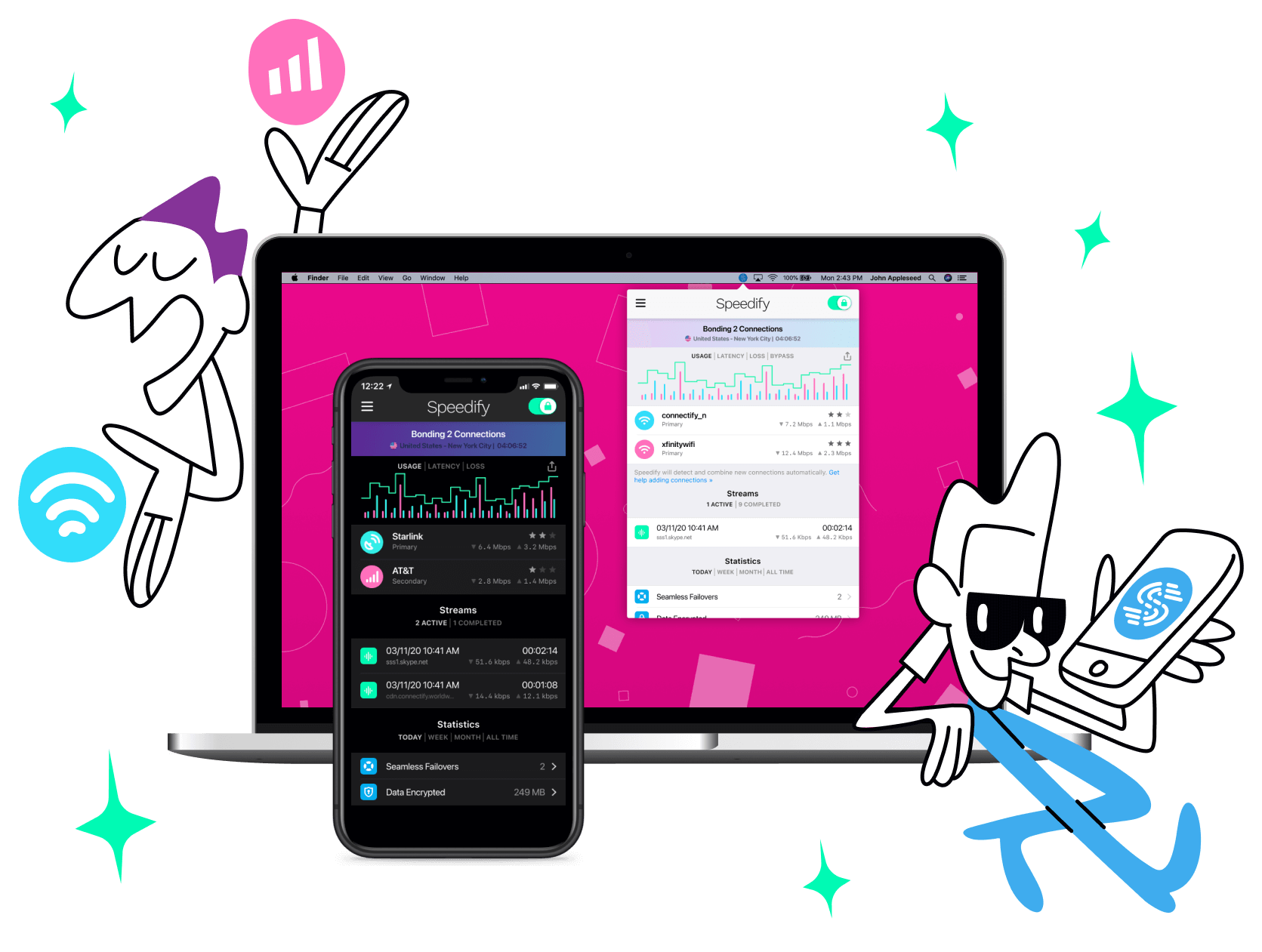
Speedify is the only app that seamlessly combines all of your connections, including Wi-Fi, 4G, 5G, Ethernet, and Starlink, into one stronger connection to keep you online and secure.
In most cases, Speedify will automatically detect and start using any available Internet connections on your device while intelligently distributing your online traffic between them for optimal performance. If you need help we have quick start guides available for most common set ups.

Combine personal hotspots for better upload and download speeds
Speedify's Pair & Share feature enables you to connect to multiple hotspots at the same time and wirelessly share LTE, 4G, and 5G cellular connections back and forth between multiple Speedify users on the same local network to create a faster, more reliable connection for everyone.
For the first time, it's possible to share cellular data between multiple devices, including PCs, Macs, iPhones and Androids. Use multiple phones as hotspots for internet access and get increased bandwidth and mobile failover for all paired devices.
Use Speedify to combine...
Combine these connections on:


What Is COBOL?
Ryan: So I'm going to backtrack a little bit. What is COBOL?
Alex Gizis: Oh, COBOL! The Common Business Oriented Language. It is the nicest, highest level, easiest to use programming language ever created in 1959. So at the time it was a super high tech, cool programming language that made it really easy to program computers.
But now we look at it as this primitive, low level thing from the age of punched cards. And the thing about it is, although at the time it was a high level language, it had numbers and it had strings, strings of characters to represent words and things. There was no date in it. So anytime someone was writing a program in COBOL, and wanted to do a date, they had to come up with their own system for how they represent dates in the computer.
And dates are hard. I mean, there's the Julian, the Gregorian calendar. There's leap years, and there's leap seconds, and there's time zones. And there's the time shifts, daylight savings. It is really, really hard. And so anyone programming something themselves is not going to get it right.
Why Are Social Security Records Broken?
Ryan: So where did these records come from?
Alex Gizis: Well, like I said, they started in 1936. And they then became punch cards. And then they got entered into an electronic database and so at every one of those steps right at the beginning there's people writing there's people punching things even once it makes into a database.
There's people typing on keyboards I think there were plenty of opportunities for some dates to just get entered wrong and for no one to notice. Instead of writing, this person was born in 1969, you type they were born in 1669, and nobody noticed, we now have a 300 year old, right?
Ryan: So it sounds like there actually are millions of dead people in the database.
Alex Gizis: Yes, first, the database has everyone who's ever gotten a social security number. So plenty of these people have died now, right? Second, they're always checking for bad data.
So in 2023, they did a big review, looking at everyone who was in the database who was born before 1920. So they'd be 103, there are some 103 year olds out there, but not that many, right? So what they found in the database, 18.9 million people. Of them, 44,000 were still receiving checks.
As a percentage of 18.9 million, that's a pretty small percentage. I'm not sure they did a terrible job, but of course, so they reviewed all these records, realized they had a bunch of bad records, closed the files.
But Social Security they've admitted, most years they send out a couple billion dollars worth of checks that they didn't mean to and then they figured it out and they cancel the checks usually.
The other thing is they just put in a hard rule in the software. Anyone who is older than 115 years old does not receive their checks. So if that 360 year old is somehow still marked as alive, when it goes to print their check, it will refuse to print it. So the 150 year olds are receiving zero. They've been receiving zero, even if they are in that database, they've got controls against that.
Ryan: That's good.
Alex Gizis: Yeah, this is a hard job, right? They're keeping track of hundreds of millions of people, people get married and change their names. People die, people get falsely submitted as dead, which is a terrible prank to do to someone. It really can mess up their life for years, all sorts of things. It's really hard to keep track of all these people. And I think they're above 99 percent accuracy, but with that many people, you end up with tens of thousands of bad checks going out sometimes.
Where Is COBOL Still Used?
Ryan: So why are they still using COBOL?
Alex Gizis: They wrote so much COBOL code, right? They got the thing working, kind of in the 70s and the 80s, using COBOL code before it was that old. Now they, there are modernization projects where they'll try to bring in these expensive consultants. And a lot of these classic government projects, they go over time and over budget.
And for what? The thing works. The problem is, it is getting harder and harder to get, not only to find people who know COBOL, but you can't even sometimes pay people to learn COBOL. Which is my experience.
When I was graduating college in 1995, I was interviewed by like four or five programmers. Everything went great. They put me in the elevator all the way to the top floor, and she says, "I only have one question. If we made you a job offer for more money than anyone else offers you, but we told you your first project was writing COBOL, what would you say?" I said, "well, I understand as a low man on the totem pole, I have to do the work no one else wants, but then you'll hire someone else and I'll move up to more interesting things."
And she says, "that's fantastic. Everyone else just says no. I'd turn down the job." So I left, and I received a job offer from them for more money than anyone else offered me. And I had to turn it down.
Ryan: Why?
Alex Gizis: Because everyone else says no, they'd never replace me. I'd start programming COBOL and then they'd say, "sorry, we can't find anyone to replace you", and now I'm the COBOL guy in the 90s. That was 30 years ago, just about exactly.
Ryan: So where is COBOL still being used?
Alex Gizis: Well, the social security office has a lot of code. I've heard tens of millions of lines of code. I think there's a fair amount in banking still. I think some of the systems used to transfer money back and forth between banks. I think some of that's COBOL. I think there's a lot of old systems that are still running. I mean everything new is not COBOL.
Everything on the internet is not COBOL. but like that banking app Zelle, the whole user interface, it's all brand new, modern, running on iOS, running on Android, all new code. But when you click to send money, it's initiating an old fashioned bank wire. I think that's going straight into COBOL code written probably in the 1970s for moving money between banks.
Everyone's afraid to change it. It works and you don't want to be the idiot who adds a bug that lets somebody transfer trillions of dollars. So there's a lot of incentive to not change it unless you're sure you're doing something better.
Ryan: So how much COBOL code is in Speedify?
Alex Gizis: None, but in 1995 I was running C++ code and man, that language seemed just so old and backwards to me. And then Java came along and I said, ah, this is finally gonna kill C++. And here we are. 2025. Speedify is written in C++. And everyone's saying that, Java's dead, but Rust, Rust is going to destroy C++. And I'm afraid it's not true. I think I'm gonna die still doing C++. It's the language of the century.
How COBOL Could Become Useful in the 21st Century
Ryan: So what should we do about the COBOL?
Alex Gizis: I've got this new vision in my head. Let's see what machine learning can do with it. Can machine learning turn these mountains of spaghetti COBOL into things that people can make sense of? Because it is getting so hard to get anyone to learn COBOL. Well, maybe we can turn it over to computers.
We can get the computers to rewrite it as Rust. Or Python, whatever the modern kids are using. To turn it into something that smart young people are willing to learn to help out because it's becoming an intangible problem. Nobody wants to touch this stuff. It's not going to get better.

Connectivity Tech Discussions
Our Connectivity Tech Discussions Between Two Palms video series shines the spotlight on Alex and technical guests, diving deep into caonversations about the latest Internet technology, including Starlink satellite, WiFi 7, Apple, fiber optics, new routers, remote connectivity, and networking protocols.
Join us and let's talk tech!