
Taking Care of Your Health Virtually
Video visits with a clinician only work if picture and sound hold up for the whole appointment, and the part most likely to fail is the internet connection at home. A dip of a couple of seconds is enough to cut a sentence in half.
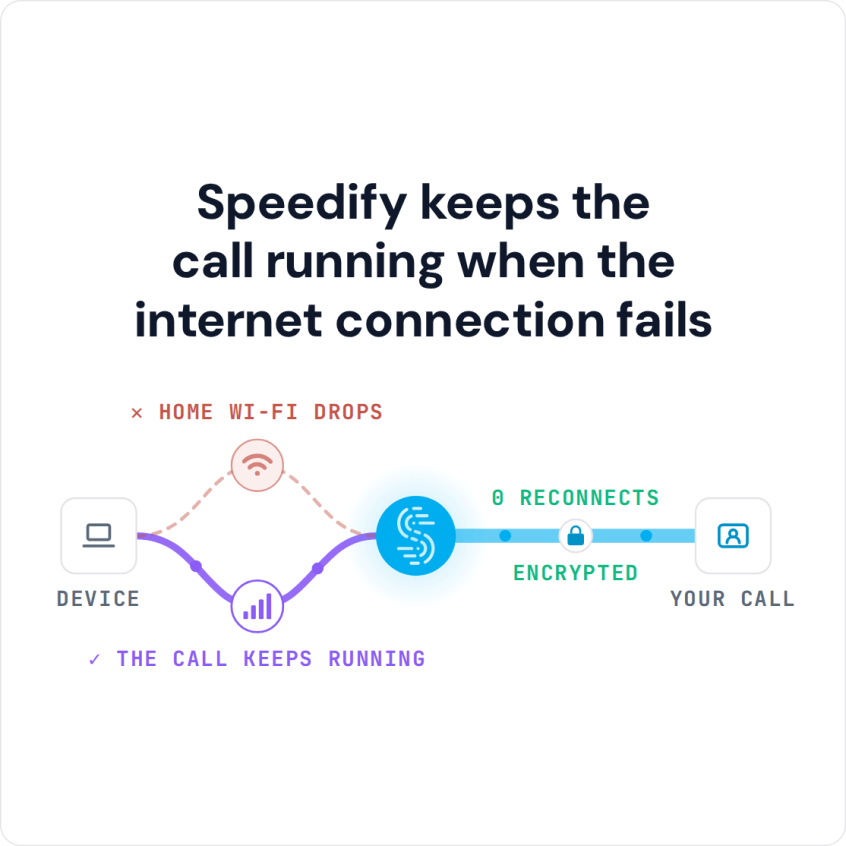
Speedify is an app that uses Wi-Fi and 4G/5G cellular data at once, plus wired Ethernet or Starlink where you have them, so the call keeps running when one of them weakens. That needs two or more internet connections: on a single connection, Speedify works as an encrypted VPN and cannot stop that connection from dropping.
This post explains what a virtual healthcare visit involves, how to get ready for yours, and how running Speedify lowers the odds of the call dropping partway through.
Preparing for Your Virtual Health Consultation is Important
You are scheduled with your Primary Care Practitioner or Specialists’ Office for your routine visit. You had your blood taken a few weeks ago. You kept a concise journal of any questions or concerns you have noticed since the last visit. You even went so far as to make sure you and your background look good for this. You put the pets out of the room and the kids and spouse too, whew! You are now ready for your closeup! It’s simple, who hasn’t been live streaming these days, right? Let’s hope you have a productive healthcare visit with your Nurse Practitioner or Medical Doctor and one that uses all of your time wisely. Interruptions over live streams or online health consultation can be counterproductive.
Here are the common internet problems during an online health consultation.
Platform issues. Your medical professional may prefer a different video platform: Zoom, Google Meet, Microsoft Teams or a patient portal app. To rule out a problem with the platform, check its status page or support social media pages. If the platform is up and running, the problem is on your side.
ISP throttling. A lot of times ISPs or Internet service providers will throttle your bandwidth for video streaming, to conserve it across the network.
Slow internet from your ISP. Also test the speed of your internet connection. For a video visit, upload matters as much as download: Zoom asks for 1.2 Mbps up and down for a one-to-one call in 720p HD video. Streaming a movie takes more download speed (Netflix lists its own figures in its internet speed recommendations), so a connection that plays movies smoothly can still stutter on calls when its upload is weak.
Unstable internet from your ISP. When you test your speed, check out the lag and jitter numbers: the lower, the better.
How to Make Sure Your Internet Can Handle a Telehealth Visit
Every video call platform offers a connection troubleshooting guide on its website, so try that first. If it does not help, try the steps below for issues with your internet connection:
- Reboot your device and router. Sometimes that’s all you need to do.
- Move closer to the wireless router. Or even better, use a wired connection, if available.
- Close any background programs that might be using bandwidth on your device. These include backup programs, social networks, collaboration tools, torrenting applications etc.
- Check to see if there are any other devices on your network using bandwidth. Maybe your kids are streaming something themselves. Or playing games online.
- If your ISP is throttling you, use a fast VPN. As streaming traffic goes through the encrypted tunnel, they won’t be able to detect it and throttle it.
- If you have a second internet connection available (for example public Wi-Fi or your phone’s 4G/5G cellular), why not use that as well? Use the extra connection together with your home internet on your device for faster, more stable internet. All you need is an app that combines internet connections, like Speedify.
Keep a Telehealth Video Call Stable on Two Connections with Speedify
Speedify is a fast VPN that combines multiple internet connections at once. Your traffic travels through an encrypted tunnel, so your privacy and data security are protected.
If one of the connections you’re using becomes slower or even disconnects, Speedify will automatically start moving traffic to the other working connection(s). When the first connection is back, it starts using it again.
And because Speedify is a VPN, you might wonder about your favorite streaming platforms. Speedify’s bypass feature sends traffic from services such as Netflix, HBO, Hulu and Disney+ outside the VPN tunnel (keep in mind that bypassed services do not get the extra speed of the combined connection).
That covers what a telehealth visit needs from your internet connection and how to improve it. You can try Speedify for free: the free tier includes 5 GB per month with a free account.
Speedify
Get started with Speedify today.
Speedify combines Wi-Fi, 4G/5G cellular, Ethernet, Starlink and satellite into one faster, more reliable internet connection. Free to try: 5 GB a month with a free account. No credit card required.
🚀 Speed
Faster uploads and downloads, because Speedify uses all your internet connections at once.
📶 Stability
If one internet connection drops, Speedify moves your traffic to the others in milliseconds.
🔒 Security
AES-256 encryption on every internet connection, on any network you join.



15M+ downloads worldwide. 75K+ five-star reviews on iOS and Android.