
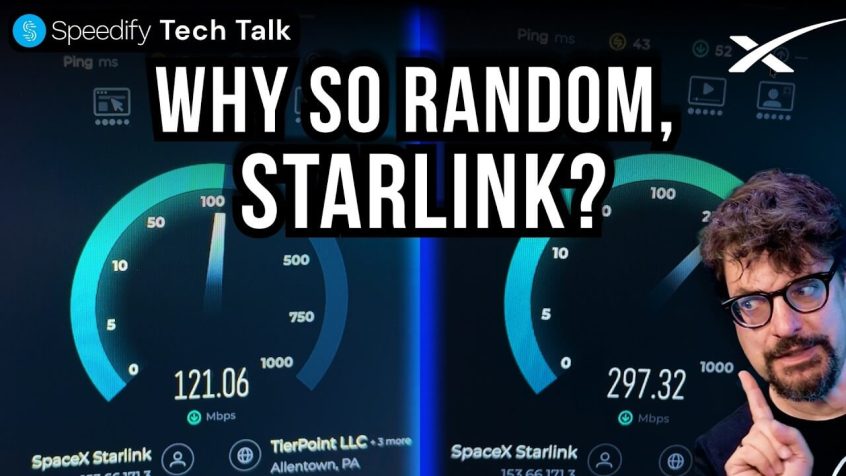
Speedify engineers discuss real Starlink speed test footage showing why Starlink bandwidth and latency are constantly changing: every 15 seconds Starlink switches satellites, and both dishes can end up on the same satellite limiting download speed to 300Mbps each instead of 600Mbps combined download speed. And, rain drops Starlink upload speeds by 52%.
Watch Now: We Tested Every Way Starlink Can Fail. Here’s What We Found

Alex and Speedify engineers discuss what actually happens when Starlink internet fails. We’ve done all kinds of tests on Starlink dropouts. Tipping dishes, blocking signals, running Starlink speed tests, triggering every Starlink error code. Our Starlink review found Starlink internet works just over 99% of the time, and that’s still days of downtime per year. The best enterprise Starlink SLA … Read More
Watch Now: Why Does Starlink’s App Fail When You Run 2 Dishes on the Same Network?

Every Starlink dish takes the same default IP address — 192.168.100.1. Run two Starlink dishes on the same network and the Starlink app can only see one of them. Starlink setup also recommends keeping dishes 30cm apart, but Starlink internet speed testing shows 8 feet of separation makes a measurable difference. Engineers discuss our findings about Starlink setup with multiple … Read More
Watch Now: Inside Starlink’s gRPC API: Latency, Obstruction & Live Stats in your Router

Starlink’s gRPC API runs on every Starlink router over HTTP/2 with protocol buffers, exposing real time Starlink internet stats to any app on your local network. Engineers discuss how we’re using Starlink’s API to measure Starlink dish performance in the Speedify app. Until recently, enabling location in the Starlink app meant the Starlink gRPC API would hand your exact GPS … Read More
Watch Now: Does Rust Actually Solve What Go Gets Wrong?
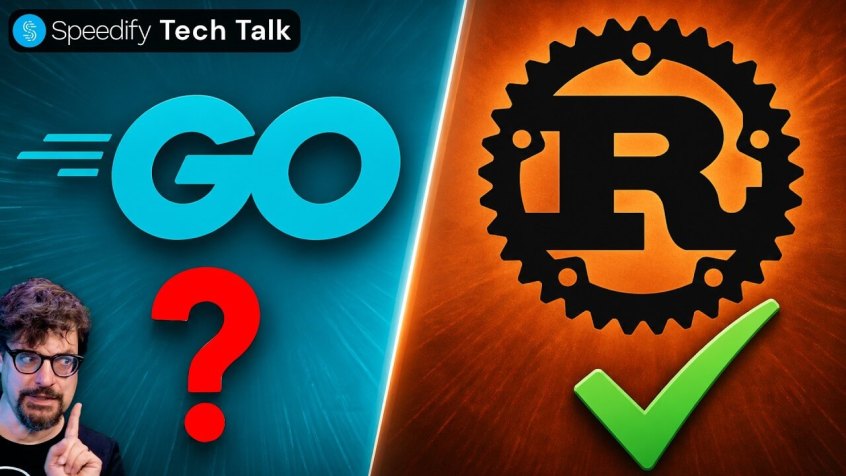
Rust vs Go: Which programming language actually solved concurrency? Go makes concurrency easy to spin up and a nightmare to manage at scale — no handles, no lifecycle, no easy error tracking. Rust takes the opposite approach, enforcing ownership at compile time so data races simply can’t exist. Frustrating sometimes, but arguably worth it. We also get into using AI … Read More
Watch Now: How Do You Review a 250,000-Line Claude Code Pull Request?
AI Developers using Claude Code and Codex are shipping 250,000 lines of code a month, but how much AI code is too much to review? And how often is your AI rewriting failing tests to hide what it broke? Our engineers have been using Claude Code, Codex, and cursor-based agents on real production code at Speedify, and the technical debt … Read More