

Speedify Bonding VPN Revives Your Internet Speed
A typical VPN does make upload and download speeds slower. Everything you send is encrypted and then pushed through a single internet connection to a server that may sit thousands of miles away, and both of those steps cost time.
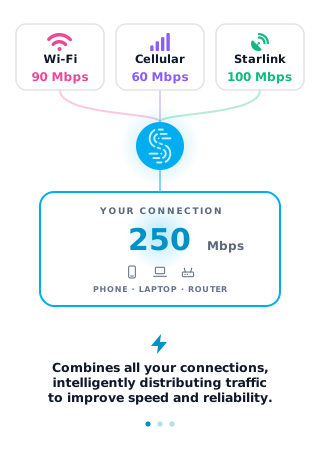
Speedify avoids that trade. Speedify encrypts your traffic and uses Wi-Fi, 4G/5G cellular data, wired Ethernet, Starlink and other internet connections at the same time, adding their speeds together instead of pushing everything down one internet connection.
You will find the five main reasons a VPN drags, five fixes to try, and what changes for streaming, video calls and remote work once Speedify is the VPN you use.
Speedify is a VPN that adds failover and faster uploads and downloads
Top 5 Reasons Why a VPN Slows Down Internet
1. Server Distance and Location
One of the primary culprits why a VPN slows down internet is connecting to servers that are geographically distant from your location. When your data travels thousands of miles to reach a VPN server, latency increases dramatically. The further the server, the longer it takes for your requests to be processed and returned, resulting in noticeable slowdowns.
2. Server Overcrowding
Popular VPN servers often become overcrowded, especially during peak usage hours. When too many users connect to the same server simultaneously, bandwidth gets divided among all users, causing significant performance degradation. This is particularly common with free VPN services that have limited server infrastructure.
3. Internet Service Provider (ISP) Throttling
Some ISPs intentionally slow down VPN traffic through a practice called throttling. They can detect VPN usage patterns and deliberately reduce bandwidth allocation for encrypted traffic. This anti-VPN stance by certain ISPs can severely impact your connection speed.
4. Outdated VPN Protocols
Using older, less efficient VPN protocols can significantly slow down your connection. Legacy protocols like PPTP or older versions of OpenVPN may not utilize modern encryption standards efficiently, creating unnecessary overhead that impacts performance.
5. Device and Network Limitations
Your device’s processing power, available RAM, and network adapter capabilities directly affect VPN performance. Older devices may struggle to handle modern encryption protocols, while network congestion on your local connection can create bottlenecks that slow down your VPN tunnel.
5 Troubleshooting Steps to Fix Internet Slow Downs Due to VPN Usage
Before you toss your device out the window, try these proven fixes:
1. Switch to a Closer Server
Start by connecting to a VPN server that’s geographically closer to your location. Most quality VPN providers offer servers in multiple countries and cities. Choose one within your region or neighboring countries to minimize latency and improve connection speeds.
2. Restart Your Router and Devices
A simple reboot can clear network congestion, close background processes hogging bandwidth, and refresh your connection.
3. Try Different VPN Protocols
Experiment with various VPN protocols available in your client. Modern protocols like WireGuard or IKEv2 often provide better performance than older options. Many VPN services now offer automatic protocol selection that optimizes for speed and security.
4. Change Server Locations During Peak Hours
If you’re experiencing slow speeds during busy periods, try connecting to servers in different time zones where usage might be lower. Switching from a crowded US server to one in Asia or Europe during off-peak hours can significantly improve performance.
5. Test Your Internet Speed without the VPN
Run speed tests with your VPN disconnected to establish a baseline. If your regular internet speed is already slow, the VPN will only amplify the issue. Contact your ISP if your base connection is underperforming.
BONUS: Use a VPN with Speed Optimization Features
Some VPNs are built for speed, combining multiple connections, avoiding congestion, and actively managing packet loss. That’s where Speedify comes in.
Does Your VPN Slow Down Internet? Get Speedify Bonding VPN
When traditional troubleshooting methods fall short, Speedify offers a different approach to solving VPN slowing down internet issues. Conventional VPN services work by connecting to the server through a single connection. Speedify utilizes channel bonding technology to combine multiple internet connections simultaneously and connect to the server through each one of the connections in the mix.
For users tired of dealing with slow VPNs, Speedify provides a comprehensive solution that combines speed, reliability, and security without the traditional trade-offs associated with VPN usage.
How Speedify Makes Your Internet Faster
Unlike traditional VPNs that route all your traffic through a single encrypted tunnel, Speedify uses a unique approach: channel bonding. This means it combines multiple internet connections, like Starlink, Wi-Fi, 4G / 5G cellular, DSL and others, into one super-connection.
Here’s why Speedify not only fixes slow VPN issue, but can also make your Internet faster and more reliable:
- Multi-Connection Support: Speedify uses all available connections at once, intelligently routing traffic to optimize performance and reduce latency.
- Failover Protection: If one connection drops or slows down, Speedify seamlessly switches to the other; no interruptions, no buffering.
- Smart Encryption: Speedify provides strong encryption without overburdening your device, maintaining speed and security.


- Real-Time Optimization: It automatically detects and resolves packet loss, jitter, and network congestion on the fly.
- Global Server Infrastructure: Speedify’s extensive server network ensures you always have a nearby, low-latency server available.
With Speedify, you don’t have to choose between speed and privacy; you get both.
Speedify
Get started with Speedify today.
Combine Wi-Fi, 4G/5G cellular, Ethernet, Starlink, and more into one faster, steadier connection. Free to try — no credit card required.
🚀 Speed
Faster uploads and downloads by bonding all your connections at once.
📶 Stability
Automatic failover in under a second when any connection drops.
🔒 Security
AES-256 encryption on every connection, on every network you join.


15M+ downloads worldwide. 75K+ five-star reviews on iOS and Android.