
Unable to Connect to Express VPN when on Public Wi-Fi? Get an Unbreakable VPN Connection by Combining Starlink, Wi-Fi, 4G, 5G, and DSL with Speedify
ExpressVPN often will not connect on airport and cafe Wi-Fi because those networks make you open a sign-in page before any app is allowed through, and that page cannot load while the VPN is trying to connect. The fix that keeps you online is a second internet connection: Speedify, an app that combines internet connections and encrypts your traffic like a VPN, sends your traffic over the hotspot and a phone’s 4G/5G cellular at once, both protected, so a shaky public network no longer decides whether you are online.
Coming up: the ExpressVPN steps to try on public Wi-Fi, plus what using Speedify does for you: an internet connection that holds and traffic that stays private. Speedify’s speed and failover gains need two or more internet connections; on a single connection, Speedify works as an encrypted VPN and can be a little slower.
Why ExpressVPN Will Not Connect on Public Wi-Fi
Some ExpressVPN users cannot connect to any public Wi-Fi, such as Starbucks. The device starts loading the network’s captive portal (the Wi-Fi login page), but the VPN cuts that connection off, so the login page never appears.
In some cases the only way online is to turn ExpressVPN off, sign in on the login page, and then turn the VPN back on. Until the VPN is back on, your traffic is unprotected, which matters on public Wi-Fi networks where strangers share the connection.
The clash comes from the way VPNs and captive portals work. A VPN creates an encrypted tunnel between your device and a server in the cloud and blocks traffic outside that tunnel. A captive portal needs your device to talk to the local network directly before it lets anything through, so the login page cannot load and you cannot connect to the internet.
How to Fix ExpressVPN Not Connecting on Public Wi-Fi
First of all, if Express VPN is not connecting, follow their failed connection troubleshooting guide. PIA users run into the same problem: see PIA VPN not connecting on public Wi-Fi.
There are different types of captive portal setups. A few captive portals accept connections on specific ports, so an advanced user who knows the port can reach the login page while ExpressVPN is running.
Most login pages, though, block outside connections such as the one from your ExpressVPN server. If you are an advanced user, you can try some of the solutions suggested here. Also, check out this interesting thread on the OpenWRT forum.
Using ExpressVPN or Speedify with a Phone Hotspot
When public Wi-Fi will not let your VPN connect, your phone’s personal hotspot is the quickest way online. To keep a laptop’s traffic encrypted, run the VPN on the laptop itself, because the laptop is the device sending that traffic. Speedify on the laptop can use the phone and the public Wi-Fi at the same time when the phone is connected by USB cable (an iPhone on a Mac or Windows PC, an Android phone on Windows and often on a Mac): the tethered phone joins as a second internet connection (it starts with the Secondary priority on desktop), and Speedify encrypts the traffic on both. Hotspot data counts against your phone plan.
Remember to Stay Safe when Using Public Wi-Fi: Use a VPN
The best way to keep your information safe while accessing a public Wi-Fi is by using a VPN. A VPN encrypts your data so if there is someone monitoring the network, they won’t be able to read the information you’re sending.
But what if your VPN (such as Express VPN) is not working on public Wi-Fi? Here are a number of ways in which you can minimize public Wi-Fi security risks:
- Don’t allow your device to auto-connect to open Wi-Fi networks
- Don’t access http websites. Only access https websites as they are more secure
- Log out of all accounts once you’re done using them
On public Wi-Fi, ExpressVPN runs into two problems:
- you may have to disconnect it while accessing the captive portals (Wi-Fi login pages), otherwise you won’t be able to access them.
- Like any VPN, ExpressVPN can make the connection slower, and public Wi-Fi is often slow to begin with, so using ExpressVPN on it becomes difficult.
How Speedify Handles Public Wi-Fi Login Pages and Keeps Traffic Protected
Speedify can tell a direct internet connection from one that requires a login page. When you join a Wi-Fi hotspot with a login page, Speedify’s captive portal assist takes over:
- Speedify shows a notification asking if you want to log in.
- In the meantime, calls, streaming and games keep running over your 4G/5G cellular connection, protected by Speedify.
- If you click the notification (or the message in the app), Speedify will pop up the login screen in a window.
- After you log in, Speedify starts using the Wi-Fi connection as well.
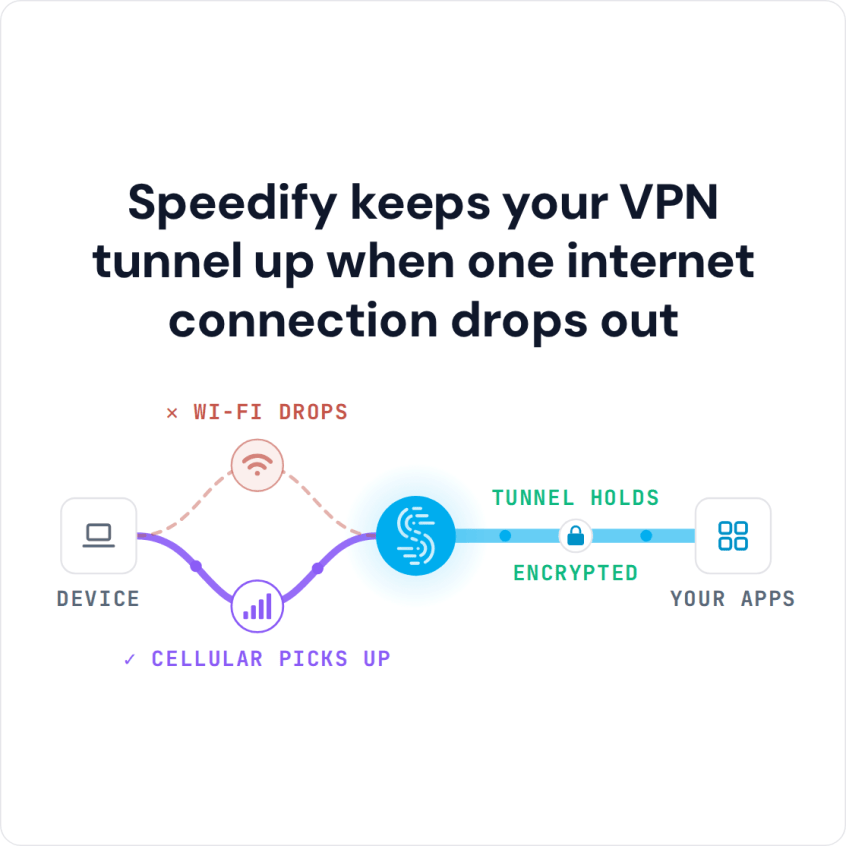
Speedify’s technology for combining internet connections uses several internet connections at once. In the example above, Speedify uses both the Wi-Fi and the 4G/5G cellular connection on your phone or computer. While the Wi-Fi login page waits for you, Speedify moves your traffic to the other connection until you sign in to the network.
Some Wi-Fi networks ask you to log in again every hour or so. With Speedify, games, streams and calls keep running on your other internet connections while you sign in again, because Speedify’s failover protection moves the traffic to the connections that still work and keeps the same public IP address, so logged-in sessions do not reset.
If ExpressVPN keeps failing on public Wi-Fi, try Speedify for free: a free account includes 5 GB per month on Windows, macOS, iOS and Android. Turn ExpressVPN off first, because two VPN apps cannot run reliably side by side on the same device.
Speedify
Get started with Speedify today.
Speedify combines Wi-Fi, 4G/5G cellular, Ethernet, Starlink and satellite into one faster, more reliable internet connection. Free to try: 5 GB a month with a free account. No credit card required.
🚀 Speed
Faster uploads and downloads, because Speedify uses all your internet connections at once.
📶 Stability
If one internet connection drops, Speedify moves your traffic to the others in milliseconds.
🔒 Security
AES-256 encryption on every internet connection, on any network you join.



15M+ downloads worldwide. 75K+ five-star reviews on iOS and Android.