


VPN Speed Tests Help You Fix Slow VPN and Get the Best Internet Speeds
VPNs have become essential tools for privacy, security, and accessing geo-restricted content. However, one common concern among users is the potential impact on internet speed.
Understanding how to test VPN tunnel speed effectively can help you optimize your connection and ensure you're getting the best possible performance from your VPN service. Speedify can help with both VPN tunnel testing and getting you the best internet.
Why Speedify VPN Stays Connected in Under a Second When Other VPNs Drop
Most VPNs rely on a single internet connection. If your Wi-Fi glitches or your device switches between 4G/5G cellular and Starlink, your VPN drops.
Speedify uses all your available internet connections at the same time: Wi-Fi, 4G/5G cellular, Ethernet, Starlink, and other satellites. If one drops, Speedify detects it within milliseconds and moves your traffic to another available internet connection. Traditional routers take 30–60 seconds to do the same thing.
In this video, you’ll see how Speedify keeps your internet connection secure, smooth, and reliable by intelligently spreading your encrypted data across Wi-Fi, 4G / 5G cellular, Ethernet, Starlink and other satellites. The result: an unbreakable VPN tunnel.
Combining Wi-Fi, 4G / 5G Cellular, Ethernet, Starlink and Other Satellites Together Makes Speedify VPN Unbreakable
Speedify combines 5G, 4G, Wi-Fi, Ethernet, Starlink and other satellite into one secure and unbreakable VPN tunnel
Speedify is the only VPN app that seamlessly combines Wi-Fi, 4G / 5G cellular, Ethernet, Starlink and other satellite internet into one unbreakable internet connection. You get faster upload and download speeds while no one can spy on what you do online. Speedify allows you to unblock restricted content by connecting to one of the VPN servers distributed across 6 continents in 50+ cities.
Speedify will automatically detect any available Internet connections on your device, encrypting and intelligently distributing your online traffic between them for optimal performance. If you need help we have quick start guides available for most common set ups.
Speedify combines multiple personal hotspots for faster internet upload and download speeds
Speedify's Pair & Share feature enables you to connect to multiple hotspots at the same time for faster upload and download speeds and more reliable internet for everyone. Speedify's Pair & Share feature allows you to wirelessly share 4G / 5G cellular connections back and forth between multiple Speedify users on the same local network when live streaming from an event, calling from the commute or sharing from the field.
Speedify is the only app that allows you to share cellular data between PCs, Macs, iPhones and Androids. Use multiple iPhones and Android phones as hotspots for internet access and get faster upload and download speeds and mobile failover for all paired devices.
See how you can use Speedify to combine available Internet connections:
Combine these connections on:


Why VPNs Can Slow Down Your Internet Connection
Before diving into testing methods, it's crucial to understand why VPNs typically reduce internet speeds. When you connect to a VPN, your data takes a longer route to reach its destination. Instead of connecting directly to websites and services, your traffic first travels to a VPN server, gets encrypted, and then forwarded to the intended destination.
This process introduces several factors that can affect speed:
Encryption overhead adds processing time as your device encrypts outgoing data and decrypts incoming traffic. While modern processors handle this efficiently, it still requires computational resources.
Server distance plays a significant role in latency. Connecting to a server thousands of miles away will naturally increase ping times and reduce overall responsiveness.
Server load affects performance when multiple users share the same VPN server. High traffic periods can lead to congestion and slower speeds.
Protocol efficiency varies between different VPN protocols. Some prioritize security over speed, while others aim for better performance.
How to Test VPN Tunnel Speed Accurately
To properly assess your VPN's impact on internet speed, you'll need to conduct baseline tests and compare results. Here's a comprehensive approach to testing VPN tunnel speed:
Step 1: Establish Your Baseline
Before connecting to any VPN, run multiple speed tests using reliable services like speedtest.net, fast.com, or maybe your ISP's speed test. Record your download speed, upload speed, and ping results. Run these tests at different times of day to account for network congestion variations.
Step 2: Test with VPN Connected
Connect to your VPN and repeat the same speed tests using identical testing locations and times. For accurate results, test multiple server locations, especially those geographically close to you and in countries you frequently need to access.
Step 3: Analyze the Results
Calculate the percentage of speed loss by comparing your VPN speeds to baseline measurements. A 10-20% reduction is typical for quality VPN services, while losses exceeding 50% may indicate issues with your chosen server or VPN provider.
Step 4: Test Different Protocols
Most VPN clients offer multiple protocol options. Test OpenVPN, WireGuard, IKEv2, and other available protocols to determine which provides the best balance of speed and security for your needs.
Fixing Slow VPN Tunnel Speeds
When your VPN connection is slower than expected, several troubleshooting steps can help improve performance:

Choose nearby servers to minimize latency. Select servers in your country or region when possible, unless you specifically need to appear in a different location.
Switch protocols to find the fastest option. OpenVPN UDP typically outperforms TCP for most applications.

Adjust encryption settings if your VPN client allows it. While maintaining adequate security, some providers offer different encryption levels that can impact speed.
Update your VPN client to ensure you're using the latest optimizations and bug fixes.
Check your local network for issues. WiFi interference, outdated router firmware, or ISP throttling can affect VPN performance.
Speedify: Optimizing Internet Performance
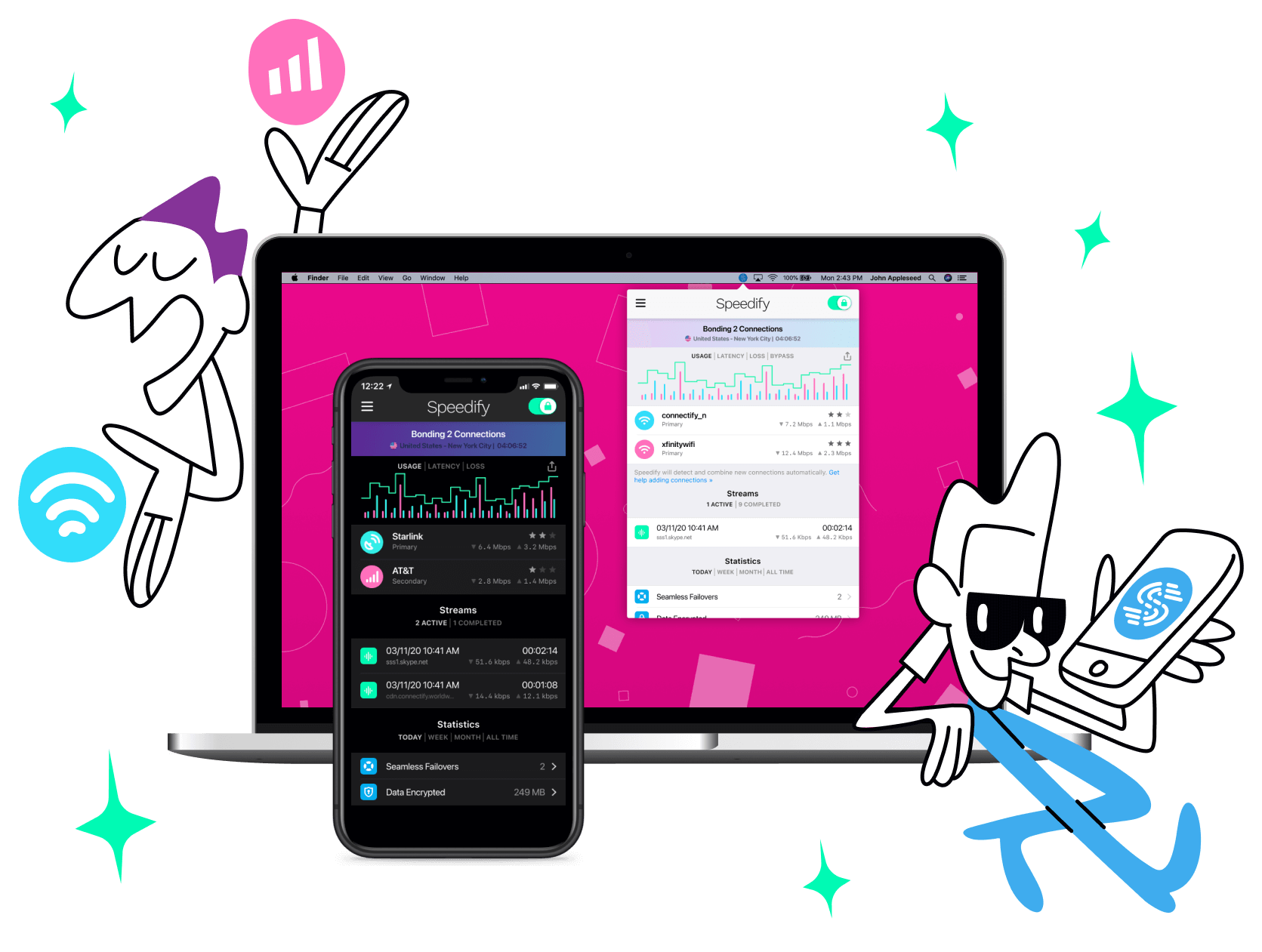
For users seeking maximum internet speeds without sacrificing security, Speedify offers a unique solution. Unlike traditional VPNs that route traffic through a single server, Speedify employs channel bonding technology that can actually improve your internet speed by combining multiple connections.
Speedify simultaneously uses Starlink, Wi-Fi, 4G / 5G cellular, DSL and other connections, aggregating their bandwidth for faster overall performance. This approach not only provides redundancy but can deliver speeds that exceed what you'd achieve with a single connection. The service automatically balances traffic across available connections and seamlessly switches between them if one becomes unreliable.
For professionals and tech-savvy users who require consistent high-speed internet access, Speedify's intelligent routing algorithms optimize performance based on real-time network conditions, making it an excellent choice for video conferencing, large file transfers, and bandwidth-intensive applications.
Get started with Speedify today!
With Speedify you can combine Wi-Fi, 4G / 5G cellular, Ethernet, Starlink and other satellites into one bonded super-connection to improve livestreaming, video calling, gaming, web browsing, and everything else you do online.


Speed
Stability
Security
Speedify engineers love talking tech on YouTube, Tiktok, and Instagram!
Alex Gizis and the Speedify engineers discuss and explain technology including Starlink satellites, Wi-Fi 7 routers, Apple networking features, fiber optics, broadband internet, 5G mobile networks, AI, networking protocols, and much more. Follow Speedify on YouTube, TikTok, Instagram, and LinkedIn!
Alex and the Speedify team are always exploring the latest in networking and security technology—like 5G, 6G, WiFi 7, laser and satellite internet—and sharing it in new discussion content across YouTube, TikTok, Instagram, and LinkedIn every week.
Got a tech question? Let's go deeper! Pop into Speedify Office Hours live every Wednesday at 10 AM Eastern. Speedify CEO Alex Gizis and our network engineers are standing by to break down your questions about networks, tech updates, and Speedify features.