
Unbreakable VPN Connection for Captive Portals by Combining Starlink, Wi-Fi, 4G, 5G, and DSL with Speedify
An always-on VPN breaks most captive portal sign-in pages, because a VPN will not pass the local redirect those pages rely on, so people switch the VPN off. Every second your VPN is switched off on a public network is a second when someone else on that network can read your traffic.
Speedify keeps its encryption running while using your Wi-Fi and your phone’s 4G/5G cellular connection together: only the sign-in page goes outside the encrypted tunnel, so the rest of your traffic stays protected while you sign in. The speed and failover gains need both connections; on Wi-Fi alone, Speedify works as an encrypted VPN and can be a little slower.
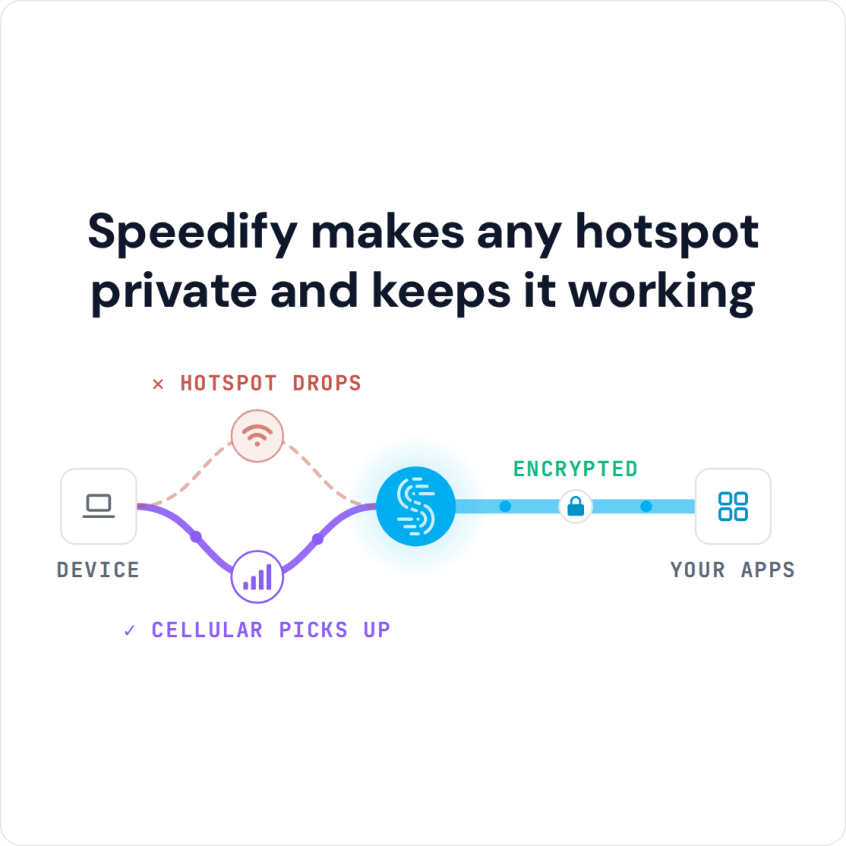
Speedify makes any hotspot private and keeps it working
Find out why an always-on VPN (one set never to switch itself off) fails on these sign-in pages, and how using Speedify logs you in with your encryption still up and your internet connection steady.
Why You Can’t Use Any VPN on Captive Portals
It all comes down to the very basics of how a VPN works: creating an encrypted tunnel between you and a server in the cloud. Any traffic outside of that tunnel is not allowed.
Captive portals usually redirect you to a webpage where you log in or accept the terms and conditions of use. Until you do, the hotspot or router at the hotel, airport or other public Wi-Fi blocks everything else.
On Android, the sign-in page opens in a built-in app called Captive Portal Login. That app is part of Android and is safe; the open Wi-Fi network behind the page is the part that needs protecting.
With the VPN on, your device sends everything through the encrypted tunnel to the VPN server, so the request never reaches the login page, and the hotspot will not carry the tunnel’s traffic until you sign in. So you cannot get online. Here is how to handle a Wi-Fi login page with your VPN on.
Workarounds for Using a VPN on Captive Portals
There are different types of captive portal setups. Some let you reach the login page on specific ports while the VPN is running, so if you know the port, you can open the login page manually.
But most login pages have rules that block external connections, like the one from your VPN server. In this case, if you’re an advanced user, you can try some of the solutions suggested here. Also, check out this interesting thread on the OpenWRT forum.
A better approach is a VPN that detects captive portals automatically and sends only that one login request outside the tunnel. That is what Speedify does.
How Speedify Handles Captive Portals with the VPN On
Speedify can tell a direct internet connection apart from one that requires a login page. When you join a Wi-Fi hotspot with a captive portal:
- Speedify shows you a notification asking if you want to log in.
- In the meantime, your other ongoing online activities (like Zoom or Slack calls, streaming, gaming) will continue to work via the cellular connection, protected by Speedify.
- If you click the notification (or the message in the app), Speedify will pop up the login screen in a window.
- After you log in successfully, Speedify immediately starts using the Wi-Fi connection.
Speedify combines Wi-Fi, 4G/5G cellular, Ethernet, Starlink and satellite internet connections into one encrypted connection. Here is what happens to your traffic on a captive portal:
- when it detects a captive portal, it automatically moves the traffic to and from the captive portal login page outside of the encrypted VPN tunnel
- once you successfully log onto the network, Speedify moves that direct traffic back to the VPN tunnel
- you can always use the split tunneling feature (Bypass) for specific services, which sends traffic to and from those services outside Speedify’s encrypted tunnel.
On Wi-Fi networks that make you log in again every hour or so, Speedify keeps you protected. Gaming, streaming and other activities keep going, because Speedify’s failover protection switches traffic to your other working connections.
Speedify
Get started with Speedify today.
Speedify combines Wi-Fi, 4G/5G cellular, Ethernet, Starlink and satellite into one faster, more reliable internet connection. Free to try: 5 GB a month with a free account. No credit card required.
🚀 Speed
Faster uploads and downloads, because Speedify uses all your internet connections at once.
📶 Stability
If one internet connection drops, Speedify moves your traffic to the others in milliseconds.
🔒 Security
AES-256 encryption on every internet connection, on any network you join.



15M+ downloads worldwide. 75K+ five-star reviews on iOS and Android.