

Diagnosing Wi-Fi Disconnection Issues on macOS with Speedify
Experiencing frequent Wi-Fi disconnections on your Mac can be frustrating, especially when you’re in the middle of critical tasks. Understanding the underlying causes is the first step toward a stable connection. Common culprits include:
- macOS Network Stack Glitches: Temporary issues within the system’s networking components.
- Router Firmware Incompatibilities: Outdated or buggy firmware can disrupt connectivity.
- Interference from Peripherals: USB 3.0 devices and certain Bluetooth peripherals can interfere with Wi-Fi signals.
- DHCP Lease Conflicts: IP address conflicts due to expired or overlapping DHCP leases.
VPN and Security Software Conflicts: Some VPNs or security tools may disrupt network stability.
Should you have a backup 4G, 5G, Starlink, or cable internet connection?
Yes — every internet connection goes down, including Starlink, which drops for ~34 minutes a day on average. A backup connection from a different provider means one outage never takes you fully offline. The most common options are a 4G/5G cellular hotspot, a cable or DSL line, or a second satellite dish.
4G/5G cellular
Works anywhere. Just a SIM or hotspot — no installation needed.
Learn more →Cable / DSL
Best for fixed locations. Different network, so outages rarely overlap.
Learn more →Second Starlink
Adds redundancy and throughput for remote sites or heavy usage.
Learn more →Speedify bonds any two connections into one — automatic failover, more speed, no dropped calls.
Try Speedify free →Step-by-Step Solutions to Stabilize Your Mac’s Wi-Fi Connection
If your Mac keeps disconnecting from Wi-Fi, there isn’t a single cause for this. Whether it’s an older Mac or the latest one, here are the main causes why this would happen:
- a software-related issue within macOS – settings, connectivity glitches, etc.
- a problem with the router / Wi-Fi hotspot
- network infrastructure issues with the ISP
Regardless of the cause, below are a few steps you can try to troubleshoot this disconnect problem.
- Prioritize Wired Connections: When possible, use a wired Ethernet connection for critical tasks to ensure stability.
- Optimize Router Placement and Settings:
- Position your router centrally and away from potential sources of interference.
- Access your router’s admin panel to:
- Update firmware to the latest version.
- Set the Wi-Fi channel to a less congested one.
- Configure Quality of Service (QoS) settings to prioritize your Mac’s traffic.
- Utilize macOS Wireless Diagnostics:
- Hold the Option key and click the Wi-Fi icon in the menu bar.
- Select “Open Wireless Diagnostics” and follow the on-screen instructions.
- Analyze the generated report for insights into signal strength, noise levels, and potential issues.
- Reset Network Configuration Files:
- Navigate to /Library/Preferences/SystemConfiguration/ and delete the following files:
- com.apple.airport.preferences.plist
- com.apple.network.identification.plist
- com.apple.wifi.message-tracer.plist
- NetworkInterfaces.plist
- preferences.plist
- Restart your Mac to regenerate fresh network settings.
- Navigate to /Library/Preferences/SystemConfiguration/ and delete the following files:
- Adjust Energy Saver Settings:
- Go to System Settings > Battery > Battery Health.
- Click the “i” icon and dDisable “Optimized Mac Battery Charging” if it’s causing network drops during sleep cycles.
Advanced Tools: Leveraging Speedify for Seamless Connectivity
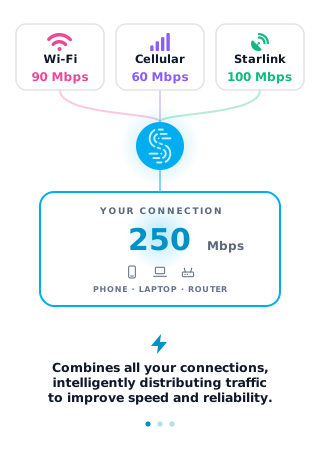
For users requiring uninterrupted internet access, especially during high-stakes activities like live streaming or remote work, consider using Speedify. This tool combines multiple internet connections—Wi-Fi, Ethernet, 4G, 5G cellular, and even Starlink—into a single, robust connection. It intelligently manages traffic, providing failover protection and bandwidth aggregation, ensuring that a drop in one connection doesn’t interrupt your workflow.
What you get is increased bandwidth, which allows all of your apps to run faster. Speedify runs in the background of your Mac proactively monitoring the quality of your connections. It is equipped with auto failover so if your Mac keeps disconnecting from Wi-Fi, it routes all the data through the wired Ethernet and the cellular connection (if available) until the Wi-Fi connection is restored. All of this activity is automated. You don’t have to do anything, and you most likely won’t even notice anything different is happening.
Speedify works on all macOS devices starting with macOS 10.12 and later. This includes all Intel and ARM based Mac computers (such as those with the new M1 processor) including Macbook, Macbook Air, and Macbook Pro, iMac and iMac Pro, Mac Mini, and Mac Pro. You can download Speedify for Mac on the download page or the Mac App Store.
Conclusion: Achieving Reliable Wi-Fi on macOS
Persistent Wi-Fi disconnections on your Mac can stem from various sources, from software glitches to hardware interference. By systematically addressing each potential issue and utilizing advanced tools like Speedify, you can achieve a stable and reliable internet connection, ensuring productivity and peace of mind.
Alex and the Speedify team are always exploring the latest in networking and security technology—like 5G, 6G, WiFi 7, laser and satellite internet—and sharing it in new discussion content across YouTube, TikTok, Instagram, and LinkedIn every week.
Got a tech question? Let's go deeper! Pop into Speedify Office Hours live every Wednesday at 10 AM Eastern. Speedify CEO Alex Gizis and our network engineers are standing by to break down your questions about networks, tech updates, and Speedify features.

Speedify
Get started with Speedify today.
Combine Wi-Fi, 4G/5G cellular, Ethernet, Starlink, and more into one faster, steadier connection. Free to try — no credit card required.
🚀 Speed
Faster uploads and downloads by bonding all your connections at once.
📶 Stability
Automatic failover in under a second when any connection drops.
🔒 Security
AES-256 encryption on every connection, on every network you join.


15M+ downloads worldwide. 75K+ five-star reviews on iOS and Android.