

How to Troubleshoot VPN Problems
Most VPN problems trace back to one thing: the VPN rides on a single internet connection, so a weak Wi-Fi signal or a busy cell tower takes the VPN down with it.
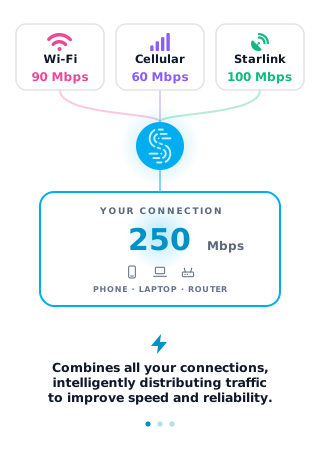
Speedify is an app that encrypts your traffic the way a VPN does, then carries that traffic over several internet connections at the same time – Wi-Fi, 4G/5G cellular data, wired Ethernet, Starlink and other internet connections – so one weak internet connection cannot end the session.
This guide covers the VPN failures people hit most – a VPN that will not connect, slow speeds, repeated drop-outs, blocked streaming and privacy leaks – and what using Speedify changes about each one.
Speedify is the VPN that stops dropping in the first place
Most Common VPN Issues Overview
Before diving into specific solutions, let’s understand the most frequent VPN problems users typically face:
Connection Issues (40% of problems): VPN won’t connect, frequent disconnections, or unstable connections that affect browsing and streaming.
Speed Problems (25% of problems): Dramatically slower internet speeds when connected to VPN servers, making streaming and downloading frustrating.
Streaming and App Compatibility (20% of problems): Popular services like Netflix, Hulu, or BBC iPlayer blocking VPN traffic or specific apps not working properly.
Device-Specific Issues (10% of problems): VPN working on one device but not another, or compatibility problems with routers, smart TVs, or mobile devices.
Privacy and Security Concerns (5% of problems): DNS leaks, IP address exposure, or concerns about whether the VPN is actually protecting your data.
Now, let’s tackle each of these issues.
VPN Won’t Connect
Why This Happens
Connection failures are the most frustrating VPN problems. They typically occur due to firewall interference, outdated software, server overload, or network configuration conflicts. Your internet service provider (ISP) might also be actively blocking VPN traffic, which is becoming more common.
Step-by-Step Solutions to Fix VPN Connecting Issues
- Check your internet connection first: Before blaming your VPN, ensure your regular internet connection is working. Try browsing without the VPN active. If your internet isn’t working, fix that issue first.
- Try different server locations: Server overload is a common culprit. Switch to a different server location within your VPN app. Choose servers that are geographically closer to you, as they typically have better performance and availability.
- Update your VPN software apps: Outdated VPN applications often have connection bugs that newer versions have fixed. Check your app store or the VPN provider’s website for updates. Always restart your device after updating.
- Change VPN protocols: Most modern VPN apps offer multiple connection protocols. Try switching between OpenVPN, IKEv2, WireGuard or any proprietary protocol the VPN software uses. Each protocol handles network restrictions differently, and one might work better with your specific network setup.
- Disable firewall and antivirus temporarily: Windows Defender, third-party antivirus software, or firewall programs sometimes block VPN connections. Temporarily disable these programs to test if they’re causing the issue. If this fixes the problem, add your VPN app to the exception list.
- Restart network components: Power cycle your modem, router, and device. Unplug them for 30 seconds, then reconnect in this order: modem first, then router, then your device. This clears network conflicts that might prevent VPN connections.
- Check account status and subscription: Ensure your VPN subscription is active and you haven’t exceeded device limits. Log into your VPN provider’s website to verify your account status.
Slow VPN Speeds
Understanding VPN Speed Loss
All VPNs cause some speed reduction because your data takes a longer route through VPN servers and requires encryption processing. However, speed loss shouldn’t exceed 20-30% with a quality VPN service.
Optimization Solutions for Slow VPNs
- Choose nearby servers: Physical distance matters significantly for VPN speeds. Connect to servers in your country or neighboring countries. A server 500 miles away will typically be much faster than one 5,000 miles away.
- Test different protocols: WireGuard typically offers the fastest speeds among traditional VPNs, followed by IKEv2, then OpenVPN. However, the fastest protocol varies by network, so test each option during peak usage hours.
- Use wired connections when possible: Wi-Fi adds another layer of potential speed loss. For activities requiring maximum speed (like large downloads or 4K streaming), use an Ethernet cable connection to your router.
- Close bandwidth-heavy applications: Background applications like cloud backup services, automatic updates, or other devices streaming video can consume bandwidth that affects your VPN performance. Close unnecessary programs and pause background downloads.
- Adjust VPN settings: Many VPN apps have speed optimization features: turn off unnecessary features like ad blocking or malware protection if you don’t need them, disable IPv6 traffic if your network doesn’t support it properly and use split tunneling to route only sensitive traffic through the VPN
- Change DNS servers: Your VPN might be using slow DNS servers. Try changing to faster public DNS servers like Cloudflare (1.1.1.1) or Google (8.8.8.8) in your VPN app settings.
- Use a bonding VPN: Solutions like Speedify can use all available connections at the same time to get you faster, more reliable Internet.
VPN Keeps Disconnecting
Common Causes of VPN Disconnections
Frequent VPN disconnections often result from power management settings, network switching, server instability, or aggressive network monitoring by your ISP.
Comprehensive Fixes when VPN Disconnects
- Enable auto-reconnect features: Most VPN apps have automatic reconnection options. Enable these features and set them to reconnect immediately when disconnection occurs. This prevents gaps in your privacy protection.
- Disable network adapter power saving: Network adapters that enter power-saving mode can cause VPN disconnections. Access your network adapter settings and disable any power-saving features.
- Configure kill switch properly: A kill switch prevents internet access when your VPN disconnects, protecting your privacy. Ensure this feature is enabled and configured correctly in your VPN app settings.
- Use OpenVPN over TCP: If you’re experiencing frequent disconnections, switch to OpenVPN over TCP instead of UDP. TCP is more reliable for unstable connections, though slightly slower.
- Check background applications: Some applications, particularly those that manage network connections, can interfere with VPN stability. Close applications like network managers, other VPN software, or connectivity tools.
- Use a bonding VPN: A VPN that can combine multiple internet connections together at once – Starlink, Wi-Fi, 4G / 5G cellular, DSL and others – will be able to eliminate disconnects as long as at least one of the combined connections is still live. And, most important, it’ll also maintain session continuity, so you won’t need to login again or refresh the page.
Netflix and Video Streaming Issues
Why Streaming Services Block VPNs
Netflix, Hulu, Amazon Prime, and other streaming platforms actively block VPN traffic to comply with content licensing agreements. They use sophisticated detection methods that identify and block VPN server IP addresses. The problem is that when you disable the VPN to access these, all your internet traffic is not protected.
Proven Workarounds for VPN Streaming Issues
- Use VPN split tunneling functionalities: If you’re not in another country but you want your Internet traffic to be protected while enjoying streaming services, a VPN with split tunneling functionalities will help. It will access the streaming platform directly while keeping all other traffic protected in the VPN tunnel.
- Use streaming-optimized servers: Premium VPN services offer specialized servers designed specifically for streaming. These servers are regularly updated with fresh IP addresses that haven’t been blocked yet.
- Clear browser cache and cookies: Streaming services store location data in your browser. Clear all cache and cookies, or use incognito/private browsing mode when accessing streaming content with your VPN.
- Try different server locations: If a US server doesn’t work for Netflix US, try different US cities. Some server locations work better than others due to how recently their IP addresses were discovered by streaming platforms.
- Use custom DNS features: Many premium VPNs offer custom DNS functionality that’s specifically designed to bypass streaming blocks while maintaining good speeds. This feature routes only the traffic that determines your location through the VPN.
- Contact customer support: Quality VPN providers actively maintain servers that work with popular streaming services. Contact your VPN’s customer support for current server recommendations that work with your desired streaming platform.
- Disable location services: Turn off location services in your browser and device settings. Some streaming platforms use multiple methods to detect your real location beyond just your IP address.
DNS Leaks and Privacy Concerns
Understanding DNS Leaks
A DNS leak occurs when your device sends DNS queries through your ISP’s servers instead of your VPN’s secure DNS servers. This means your ISP can see which websites you’re visiting, even while connected to a VPN.
Testing and Fixing DNS Leaks
- Test for DNS leaks: Visit dnsleaktest.com or ipleak.net while connected to your VPN. These services will show you which DNS servers are handling your requests. You should only see your VPN provider’s DNS servers or the servers you’ve manually configured.
- Configure custom DNS servers: Manually set your DNS servers to secure options like:
Cloudflare: 1.1.1.1 and 1.0.0.1,
Quad9: 9.9.9.9 and 149.112.112.112
or Your VPN provider’s DNS servers - Disable IPv6: IPv6 can cause DNS leaks because many VPNs don’t handle IPv6 traffic properly. Disable IPv6 in your network settings or choose a VPN that offers full IPv6 support.
- Use VPN’s built-in DNS protection: Enable DNS leak protection in your VPN app settings. This feature forces all DNS queries through your VPN’s secure servers.
- Flush DNS cache: Clear your DNS cache to ensure you’re using the new DNS servers:
Windows: Open Command Prompt as administrator and run “ipconfig /flushdns”
Mac: Run “sudo dscacheutil -flushcache” in Terminal
Linux: Run “sudo systemctl restart systemd-resolved”
VPN Not Working on Specific Devices
Device-Specific Troubleshooting
Different devices have unique VPN challenges due to their operating systems, hardware limitations, or network configurations.
Windows Issues and Solutions
Registry problems: Sometimes Windows registry entries conflict with VPN software. Use your VPN provider’s official removal tool if available, then reinstall the software completely.
TAP adapter issues: VPN software installs virtual network adapters. If these become corrupted, uninstall and reinstall your VPN software, or manually remove TAP adapters from Device Manager.
Windows update conflicts: Major Windows updates sometimes break VPN compatibility. Check your VPN provider’s website for Windows-specific updates or compatibility patches.
Mac-Specific Solutions
System extensions: macOS requires approval for VPN system extensions. Go to System Preferences > Security & Privacy > General and approve any blocked extensions from your VPN provider.
Keychain access: VPN certificates stored in Keychain can become corrupted. Open Keychain Access, find VPN-related certificates, delete them, and reinstall your VPN software.
Network location: Create a new Network Location in macOS Network preferences specifically for VPN use. This can resolve conflicts with other network configurations.
Mobile Device Troubleshooting
iOS issues: Ensure your VPN app has permission to add VPN configurations (Settings > General > VPN & Device Management). Delete old VPN profiles before installing new ones.
Android problems: Check that your VPN app isn’t being killed by battery optimization. Add your VPN app to the “don’t optimize” list in battery settings.
Router configuration: For devices that can’t run VPN software directly, configure your router with VPN settings to protect all connected devices.
Gaming and P2P Issues with VPNs
Gaming-Specific Problems
Online gaming with VPNs presents unique challenges due to increased latency, potential port blocking, and strict anti-cheat systems.
Gaming Optimization Tips When Running VPNs
- Choose gaming-optimized servers: Many premium VPN providers offer specialized gaming servers with optimized routing and reduced latency. These servers are specifically configured for real-time applications.
- Use split tunneling: Route only sensitive traffic through your VPN while allowing games to connect directly. This reduces latency while maintaining privacy for web browsing and other activities.
- Enable UPnP and port forwarding: Some games require specific ports to be open. Enable UPnP in your router settings or manually configure port forwarding for your games. Check your VPN provider’s documentation for gaming port requirements.
- Disable QoS interference: Quality of Service (QoS) settings on your router might conflict with VPN traffic prioritization. Temporarily disable QoS to test if it improves gaming performance.
P2P-Specific Problems
Peer-to-peer downloads, including torrenting, are strictly regulated by laws in most countries. This means that VPN providers will not allow torrenting on all their servers.
P2P and Torrenting Solutions
- Use P2P-friendly servers: Not all VPN servers allow torrenting. Use servers specifically designated for P2P traffic to avoid connection blocks or speed throttling.
- Bind your torrent client: Configure your torrent client to only use your VPN’s network adapter. This prevents torrenting if your VPN disconnects, protecting your real IP address.
- Check port forwarding availability: Some VPN providers offer port forwarding, which can improve torrent speeds by allowing incoming connections. Enable this feature if available.
Why Is My VPN Not Working Suddenly?
Sudden VPN failures typically result from software updates, server maintenance, network changes, or ISP blocking. Try different servers first, then check for app updates. If problems persist, your ISP might have implemented new VPN blocking measures.
How Can I Make My VPN Faster?
Connect to nearby servers, use wired connections instead of Wi-Fi, close bandwidth-heavy applications, try different VPN protocols, and try using a bonding VPN to combine all available connections for increased speed.
Why Does My VPN Keep Disconnecting on Mobile?
Mobile VPN disconnections often occur due to aggressive power management, network switching between Wi-Fi and 4G / 5G cellular, or background app restrictions. Disable battery optimization for your VPN app and enable always-on VPN features in your device settings. You can also use a VPN that combines Wi-Fi with 4G / 5G mobile data, like Speedify.
Can I Use a VPN on My Router?
Yes, configuring your router with VPN settings protects all connected devices automatically. This is especially useful for devices that can’t run VPN software directly, like smart TVs, game consoles, or IoT devices.
Why Is My VPN Not Working with Public Wi-Fi?
Public Wi-Fi networks often block VPN traffic or use captive portals that interfere with VPN connections. Try connecting to the Wi-Fi first, completing any login requirements, then activating your VPN. Use different protocols if standard connections fail. Or use a VPN that can recognize captive portals and connect directly to the login page.
How Do I Fix VPN Authentication Errors?
Authentication errors typically mean incorrect login credentials, expired subscriptions, or account issues. Verify your username and password, check your subscription status, and ensure you haven’t exceeded device connection limits.
Why Won’t My VPN Work with My Antivirus?
Antivirus software sometimes identifies VPN traffic as suspicious and blocks connections. Add your VPN application to your antivirus exception list, or temporarily disable real-time protection to test if this resolves the issue.
Advanced Troubleshooting for VPN Issues
Network analysis tools
For persistent issues that basic troubleshooting can’t resolve, use network analysis tools to identify the root cause.
- Command line diagnostics: Use ping, traceroute, and nslookup commands to test network connectivity and identify where connections are failing. These tools help pinpoint whether issues are local, with your ISP, or with VPN servers.
- Wireshark analysis: Advanced users can use Wireshark to analyze network traffic and identify exactly what’s happening during connection attempts. This is particularly useful for diagnosing protocol-specific issues.
- MTU size adjustment: Maximum Transmission Unit (MTU) size mismatches can cause connection problems. Try reducing your MTU size to 1200 or 1300 if you experience connection drops or slow speeds.
Professional network configuration
- DDNS configuration: If you’re running servers or need consistent access to your home network, configure Dynamic DNS to work with your VPN setup.
- Multi-Hop VPN setup: For maximum security, configure connections through multiple VPN servers. This adds complexity but provides additional privacy layers.
- Custom OpenVPN configuration: Create custom OpenVPN configuration files with specific cipher settings, compression options, and routing rules tailored to your network environment.
Enterprise and Business Solutions
- Site-to-Site VPNs: Business users might need to configure site-to-site VPN connections between offices. This requires router configuration and often professional IT support.
- Load balancing: Distribute VPN connections across multiple servers or providers to improve reliability and speed for business applications.
- Compliance requirements: Ensure your VPN configuration meets industry-specific compliance requirements like HIPAA, GDPR, or SOX regulations.
Conclusion – Fixing VPN Issues
Remember that not all VPN providers offer the same level of support and features. If you’re consistently experiencing problems that these solutions can’t resolve, it might be time to consider switching to a more reliable VPN service with better infrastructure and customer support.
Regular maintenance of your VPN setup, including software updates, periodic speed tests, and security audits, will help prevent many common issues before they become frustrating problems. With the right knowledge and tools, you can maintain a fast, stable, and secure VPN connection that protects your online privacy without compromising your internet experience.
Speedify
Get started with Speedify today.
Combine Wi-Fi, 4G/5G cellular, Ethernet, Starlink, and more into one faster, steadier connection. Free to try — no credit card required.
🚀 Speed
Faster uploads and downloads by bonding all your connections at once.
📶 Stability
Automatic failover in under a second when any connection drops.
🔒 Security
AES-256 encryption on every connection, on every network you join.


15M+ downloads worldwide. 75K+ five-star reviews on iOS and Android.