
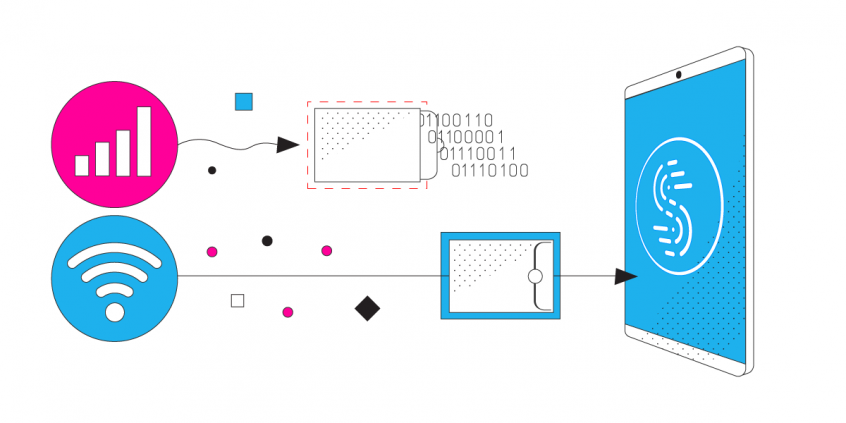
What Are Hybrid Access Networks?
An ISP with a copper footprint and a cellular network has two ways to reach a customer and, usually, no way to use both at once. Hybrid access is the architecture that changes that – and it has historically needed gateway hardware at both ends.
Speedify is software that bonds fixed and cellular connections without that hardware, which lets an ISP offer a faster, steadier service over the lines it already has.
Take a look at what hybrid access networks are, the forms they take, and how a software approach compares.
Watch now
How Speedify's channel bonding technology works on any hardware
Get started with Speedify for your business
Speedify offers three commercial paths. They're not exclusive — most enterprise customers combine two or more.
01
Speedify Teams
Speedify on every supported OS for every team member
Centralized dashboard for billing, user provisioning, and usage analytics
CSV import/export and a RESTful management API
02
Speedify for Routers
License for supported OpenWrt routers
Powered by Speedify hardware lineup ready to deploy out of the box
Miri, GL.iNET, and other partner models
Whole-LAN bonding without per-device install
03
Embed Speedify into your product
A · DIY
Build it yourself with the Speedify SDK.
Integrate Speedify into your iOS, Android, Windows, macOS, Linux, or QNX product. Full developer documentation, sample code, and supported integration paths. You own the build, we provide the bonding stack.
B · CUSTOM ENGINEERING
Have us build it for you.
What Are Examples of Hybrid Networks?
Here are some examples of hybrid networks:
- Home Networks: A typical home network often combines Wi-Fi and Ethernet connections. Devices like laptops and smartphones connect wirelessly to a Wi-Fi router, while desktop computers and gaming consoles are often connected to the router via Ethernet cables.
- Enterprise Networks often combine wired and wireless networks to provide flexible connectivity for employees.
- Wired networks are used for critical infrastructure and servers, while Wi-Fi networks are used for employee devices like laptops and mobile phones.
- Some enterprises also use cellular networks for remote workers and mobile devices.
- Campus Networks such as those found in universities and corporate campuses, often combine wired and wireless networks. Wired networks are used for high-bandwidth applications like research and data transfer, while Wi-Fi networks are used for student and faculty devices.
- Hybrid Cloud Networks combine public and private cloud infrastructure. This allows organizations to leverage the benefits of both public cloud flexibility and private cloud security.
What Are the Main Types of Access Networks?
An access network is a type of network which physically connects an end system to the immediate router (also known as the “edge router”) on a path from the end system to any other distant end system.
The main types of access networks used by ISPs and network carriers are:
- Wired access networks:
- DSL (Digital Subscriber Line),
- Cable Internet,
- Fiber-optic (FTTH),
- Hybrid fiber coaxial (HFC).
- Wireless access networks:
- Wi-Fi,
- Cellular networks (4G, 5G),
- Satellite.
Speedify Enables Hybrid Access Networks Solution Directly on Client Devices
As markets, customers, and smartphones continue to multiply, Network Operators and MVNOs are facing critical bandwidth issues. With soaring costs and overloaded cellular networks, carriers have been working for years to develop hybrid access networks technologies. These would enable to offload the increased traffic to broadband or DSL. And also leverage existing investments in infrastructure to no avail.
When implementing hybrid access networks, the following client-side issues must be taken into account:
- iOS and Android devices are unable to tell when a hotspot is “dead” or not functioning properly
- Manually switching between networks is time consuming and cumbersome
- Consumers end up with interrupted internet access during network changeovers
- Consumer concern about hotspot security
Speedify addresses all of these with seamless channel bonding technology.
Speedify Is an All-in-One Hybrid Access Networks Solution
For network carriers and MVNOs, the benefits of Hybrid Access through Speedify are twofold. Moving more traffic off of LTE and onto Wi-Fi results in:
- bigger savings
- a better internet experience for customers.
Speedify is a complete solution to channel bonding and Hybrid Access on mobile devices and laptop/desktop computers. It can be built into existing iOS, Android, Windows, and MacOS software. It runs in the background monitoring and improving network performance for all the apps on the device. Speedify is cost aware and uses policy based routing. This means that it can be configured for increased speed or reduced cellular usage. Optional VPN encryption means that Speedify can also keep users secure across public Wi-Fi networks.
Currently, when a consumer connects to a dead hotspot, the device does not automatically fall back to using LTE. Instead, the consumer is stranded without any internet connection. This creates a poor user experience and discourages future use of hotspots. Speedify eliminates this problem.
Speedify Is Used on Millions of Devices Worldwide
Speedify has powered stronger Internet for millions of consumers since 2014
15M
Millions of Speedify downloads worldwide, and growing every day5⭐️
More than 75,000 5-star reviews for Speedify in the iOS and Android app stores82
Points of Speedify presence in datacenters around the globe500TB
Hundreds of terabytes of fast, secure data streamed every week via SpeedifySpeedify Partners
Speedify partners with these amazing organizations to deliver better internet and next-generation networking technology to their customers and employees.


Speedify Business Solutions
Speedify Teams
Speedify for Routers

Speedify Embedded Solutions and Integrations
Embed Speedify software into your app or hardware products and leverage the core channel bonding technology of Speedify in new and interesting ways.