


The Truth About VPN Speeds and How to Improve Them
Many internet users wonder if a VPN can speed up the internet speed. While VPNs typically slow down your connection due to encryption overhead, in certain circumstances, a VPN can actually improve your internet speed. This is due to the fact that it might bypass ISP throttling and optimize routing paths.
But the most important thing for a fast VPN is to be able to use all available connections at once and move data through them in parallel. This is what Speedify does.
Why Speedify VPN is unbreakable vs. other VPNs
Most VPNs stop working the moment one of your internet connections has a problem. If your Wi-Fi glitches, or your device briefly switches between 4G / 5G and Starlink, you can suddenly lose your VPN connection.
Speedify is built to prevent that. Instead of relying on just one connection, Speedify can use all your available internet connections at the same time: Wi-Fi, Ethernet, 4G / 5G cellular, even Starlink or other satellite. If one connection slows down or drops, Speedify instantly moves your traffic to another internet source so your VPN stays connected and your online activity isn’t interrupted.
In this video, you’ll see how Speedify keeps your internet connection secure, smooth, and reliable by intelligently spreading your encrypted data across the available connections. The result: an unbreakable VPN tunnel.
Combining multiple internet sources like Wi-Fi, 4G, 5G, Starlink and wired broadband together makes Speedify VPN unbreakable
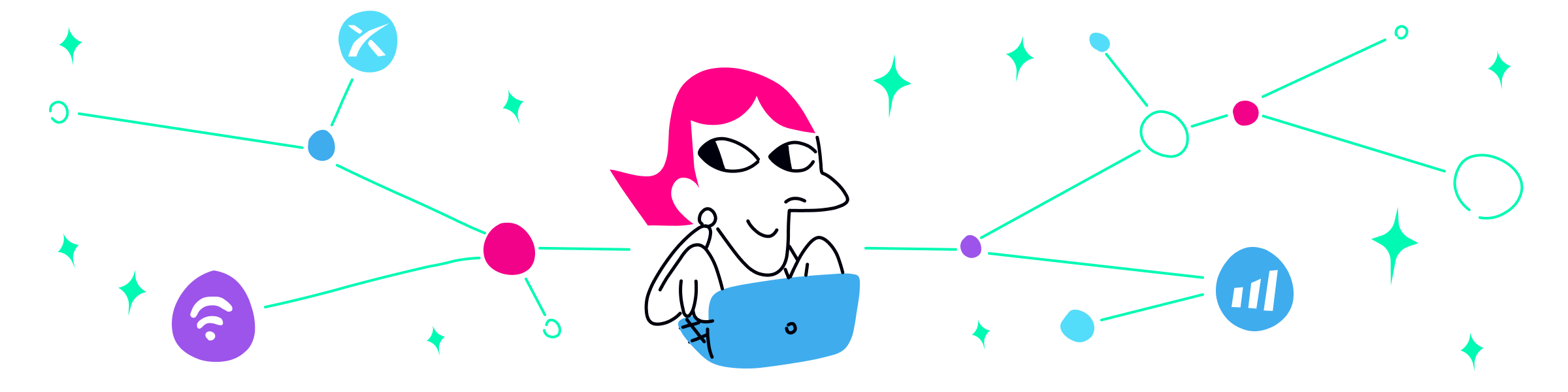
Speedify combines Wi-Fi, 4G, 5G, Starlink and wired broadband for secure and unbreakable VPN tunnels
No matter how secure your VPN is, if you experience a drop in your Internet connection, either your VPN tunnel will break leaving you unprotected, or you’ll be stuck offline. Speedify is the only VPN that seamlessly combines all of your connections, including Wi-Fi, 4G, 5G, Ethernet, and Starlink, into one unbreakable connection to keep you online and secure.
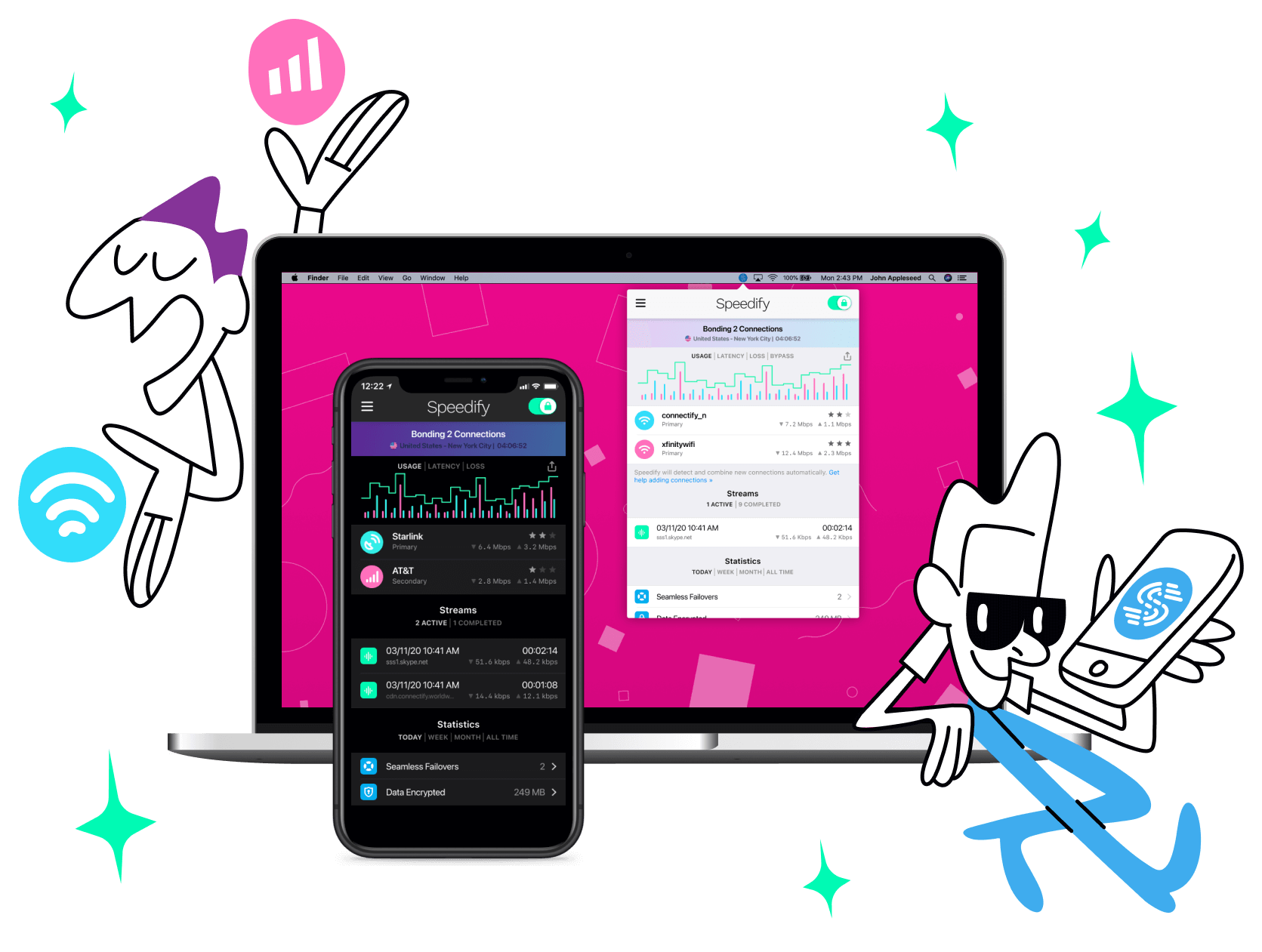
Speedify will automatically detect any available Internet connections on your device, encrypting and intelligently distributing your online traffic between them for optimal performance. If you need help we have quick start guides available for most common set ups.
Combine personal hotspots for unbreakable and secure uploads and downloads
Speedify's Pair & Share feature enables you to connect to multiple personal hotspots at the same time and wirelessly share LTE, 4G, and 5G cellular connections back and forth between multiple Speedify users on the same local network to create a faster, more reliable connection for everyone.
With Speedify, all of your available internet sources - even shared personal hotspots - are combined inside the secure VPN tunnel with your encrypted traffic intelligently distributed between them, while split tunneling allows blocked sites to bypass. So, if any connection slows down or drops out, the VPN tunnel stays active and the other connections will automatically take over to keep you securely, seamlessly connected.
Use Speedify to combine...
Combine these connections on:


Why VPNs Usually Slow Down Your Internet
1. Encryption Overhead
The primary reason VPNs reduce internet speed is the computational cost of encryption and decryption. Every piece of data must be encrypted before leaving your device and decrypted at the VPN server, creating additional processing time. This encryption overhead can reduce speeds by 10-50% depending on the protocol used and your device's capabilities.
2. Server Distance and Routing
When you connect to a VPN server, your internet traffic takes a longer route to reach its destination. Instead of connecting directly to websites, your data travels to the VPN server first, then to the target site. This extended path increases latency and can significantly impact browsing speeds, especially for real-time applications like gaming or video calls.
3. Server Congestion
Popular VPN servers often become overcrowded, particularly during peak usage hours. When hundreds or thousands of users share the same server resources, bandwidth gets divided among all connected users. This congestion creates bottlenecks that dramatically reduce connection speeds for everyone on that server.
4. ISP Network Limitations and Throttling
A VPN cannot perform miracles if your underlying internet connection is weak or unstable. Plus, some internet service providers actively throttle or deprioritize VPN traffic. They can detect encrypted traffic patterns and intentionally slow down these connections.
5. Suboptimal VPN Protocol Selection
Using outdated or inappropriate VPN protocols can significantly impact performance. Legacy protocols like PPTP or poorly configured OpenVPN connections create unnecessary overhead, while modern protocols like WireGuard offer better speed-to-security ratios.
How to Speed Up Your VPN
First thing - make sure your VPN doesn't slow down your Internet connection (much). Here are some steps for that:
1. Choose Servers Strategically
Select VPN servers that are geographically closer to your location and have lower user loads. Many VPN providers display server load percentages in their apps. Aim for servers with less than 50% capacity and minimal distance from your physical location to optimize performance.
2. Experiment with Different Protocols
Switch between available VPN protocols to find the fastest option for your setup. For conventional VPNs, WireGuard typically offers the best performance, followed by IKEv2 and modern OpenVPN implementations. Test each protocol during different times of day to account for varying network conditions.
3. Optimize Your Device Settings
Close unnecessary applications that consume bandwidth and processing power. Disable features like automatic updates, cloud syncing, and background app refresh while using your VPN. These optimizations free up resources for VPN processing and improve overall performance.
4. Split Tunneling Configuration
Use split tunneling to route only specific traffic through the VPN while allowing other applications to use your direct internet connection. This reduces the load on your VPN connection and can improve speeds for applications that don't require VPN protection.
5. Upgrade Your Internet Plan
If your base internet speed is already slow, a VPN will only amplify the issue. Test your connection speed without the VPN active, and consider upgrading your internet plan if speeds are consistently below your needs.
BONUS: Get a VPN that combines multiple internet connections at the same time, like Speedify.
When Can a VPN Actually Speed Up Your Internet?
Yes, a VPN can speed up your internet in specific situations. Here's how:
- Bypasses ISP Throttling: If your ISP is limiting your speed on specific services (like Netflix, YouTube, or gaming), a VPN can hide that traffic and prevent throttling.
- Improves Routing Efficiency: Some VPNs offer better routing than your ISP, which means your data travels a more direct path—resulting in faster speeds.
- Reduces Packet Loss: High-quality VPNs can stabilize your connection by reducing packet loss and jitter, especially useful for video calls and gaming.
- Uses all available connections at once: Wi-Fi and 4G / 5G cellular data for mobile devices, along with Starlink, DSL and others for computers and routers - bonding VPNs will actually speed up your internet by aggregating the bandwidth of bonded connections.
But not all VPNs are created equal. If you’re serious about improving internet speed and stability, you need a bonding VPN built specifically for performance, like Speedify.
Introducing Speedify: a VPN That Speeds Up Internet

Here’s how Speedify VPN improves internet speed and reliability:
- Combines all available connections at once: Wi-Fi, 4G / 5G mobile data, Starlink, DLS, and more into one fast connection
- Detects and bypasses slow or congested paths in real time
- Automatically avoids packet loss, lag, and disconnections
- Secures your data with strong encryption without sacrificing speed
- Protects against ISP throttling by masking your traffic.

Whether you're working remotely, streaming video, or gaming online, Speedify VPN gives you a noticeable performance boost, especially in areas with unstable or limited connectivity.
While traditional VPNs typically slow down internet connections due to encryption overhead and routing inefficiencies, the right approach can minimize these impacts. Through strategic server selection, protocol optimization, and advanced solutions like Speedify's channel bonding technology, users can enjoy both security and speed without compromise.


Speed
Stability
Security
Speedify devs love talking tech on YouTube, Tiktok, and Instagram!
Alex Gizis and the Speedify devs discuss and explain technology including Starlink satellites, Wi-Fi 7 routers, Apple networking features, fiber optics, broadband internet, 5G mobile networks, AI, networking protocols, and much more. Follow Speedify on YouTube, TikTok, Instagram, and LinkedIn!
Alex and the Speedify team are always exploring the latest in networking and security technology—like 5G, 6G, WiFi 7, laser and satellite internet—and sharing it in new discussion content across YouTube, TikTok, Instagram, and LinkedIn every week.
Got a tech question? Let's go deeper! Pop into Speedify Office Hours live every Wednesday at 10 AM Eastern. Speedify CEO Alex Gizis and our network engineers are standing by to break down your questions about networks, tech updates, and Speedify features.