

What Do You Call Speedify Running on a Raspberry Pi? SpeedyPi! Get an Unbreakable VPN Connection for RaspberryPi by Combining Starlink, Wi-Fi, 4G, 5G, and DSL
A Raspberry Pi VPN setup with Speedify takes one install command and lifts a hard limit: a Raspberry Pi normally reaches the internet through one internet connection at a time, the onboard Wi-Fi or the Ethernet port.
Speedify runs on a Raspberry Pi. Speedify for Linux installs on Raspberry Pi OS (Bookworm or later) and combines the internet connections the Pi can see, such as Wi-Fi, 4G/5G cellular, wired Ethernet and Starlink, into one faster, more reliable connection, encrypted like a VPN. On Linux, Speedify needs a paid plan: the free tier does not cover Linux.
Speedify runs on every device you already use
Below: the install command (the Raspberry Pi 5, 4 B and 3B+ are tested models), how to confirm Speedify really is using every internet connection, and the projects this setup opens up, from a streaming rig with more upload speed to a Pi that stays online when one internet connection dies. The speed and failover gains need at least two internet connections; with one, Speedify works as an encrypted VPN and can be a little slower.
Why Run Speedify on a Raspberry Pi: Router and Streaming Projects
As a VPN that combines connections, Speedify lets the Pi use every internet connection available to it and combine them simultaneously for better speeds and reliability (see how the technology for combining internet connections works). Speedify for Linux (Ubuntu and Raspberry Pi OS) can also share the combined VPN connection over Wi-Fi or wired Ethernet.
Like any VPN, Speedify encrypts all your web traffic, so the networks you connect through cannot read it, and it can reach websites and services that a local network blocks.
The most common reason to install Speedify on a Raspberry Pi is to build a router that combines internet connections. That router covers your home and protects every device connected to it, with faster speeds and even ad blocking if you switch to AdGuard DNS.
Another project is using the Pi as the “brains” of an IRL streaming backpack. Speedify’s team built one; the full build guide is here.
How to Install Speedify for Linux on a Raspberry Pi
This guide starts with a Raspberry Pi that runs Raspberry Pi OS (Bookworm or later). Depending on what Raspberry Pi package you buy, it may come with the OS on a microSD card. If you don’t get the full kit, use one of your own cards and follow the instructions to set up Raspberry Pi OS on your Pi.
Boot the Pi into Raspberry Pi OS and follow these steps:
Step 1: Install Speedify for Linux
Open the Linux Terminal, copy / paste the below command and hit Enter:
wget -qO- https://get.speedify.com | sudo -E bash -
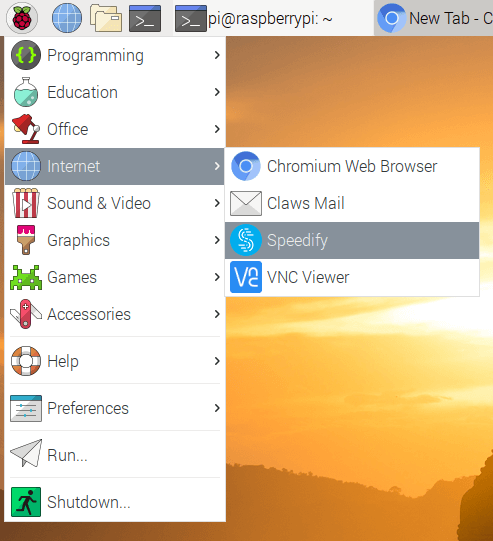
You can now find Speedify in the Internet apps menu.
Step 2: Connect your Internet sources to the Raspberry Pi
What Internet connections do you have available? Usually in any home there’s Wi-Fi or wired Ethernet and a cellular connection from your smartphone. Here are others you may not be aware of.
In this example, the Pi combines two internet connections: the home Wi-Fi and the 4G/5G cellular connection from an Android phone.
The Android phone is tethered over USB. You can also tether over Bluetooth or over Wi-Fi, but tethering over Wi-Fi takes up the Pi’s Wi-Fi. The built-in Wi-Fi card of the Raspberry Pi can only connect to one network at a time, so the Pi could not also join your home Wi-Fi.
If you connect to your home network over Ethernet, you can tether your smartphone over Wi-Fi instead. Without an Ethernet cable, connect the Pi to your home network over Wi-Fi and tether the Android phone over USB. If you are wondering why this guide has no Ethernet cable, that is Bruno in the photo below, and he ate it. Literally.

Next, connect your Android phone to the Raspberry Pi with a USB cable. To turn on USB tethering, go to Settings > Network & Internet > Hotspot & Tethering on the phone and turn on USB tethering.
Also don’t forget to connect to the Wi-Fi network from Raspberry Pi.
Step 3: Open Speedify, sign in and connect
As you connect all Internet sources to the Raspberry Pi, you will see that Speedify immediately recognizes them. If you stream live, see how to build a router that combines internet connections for streaming.
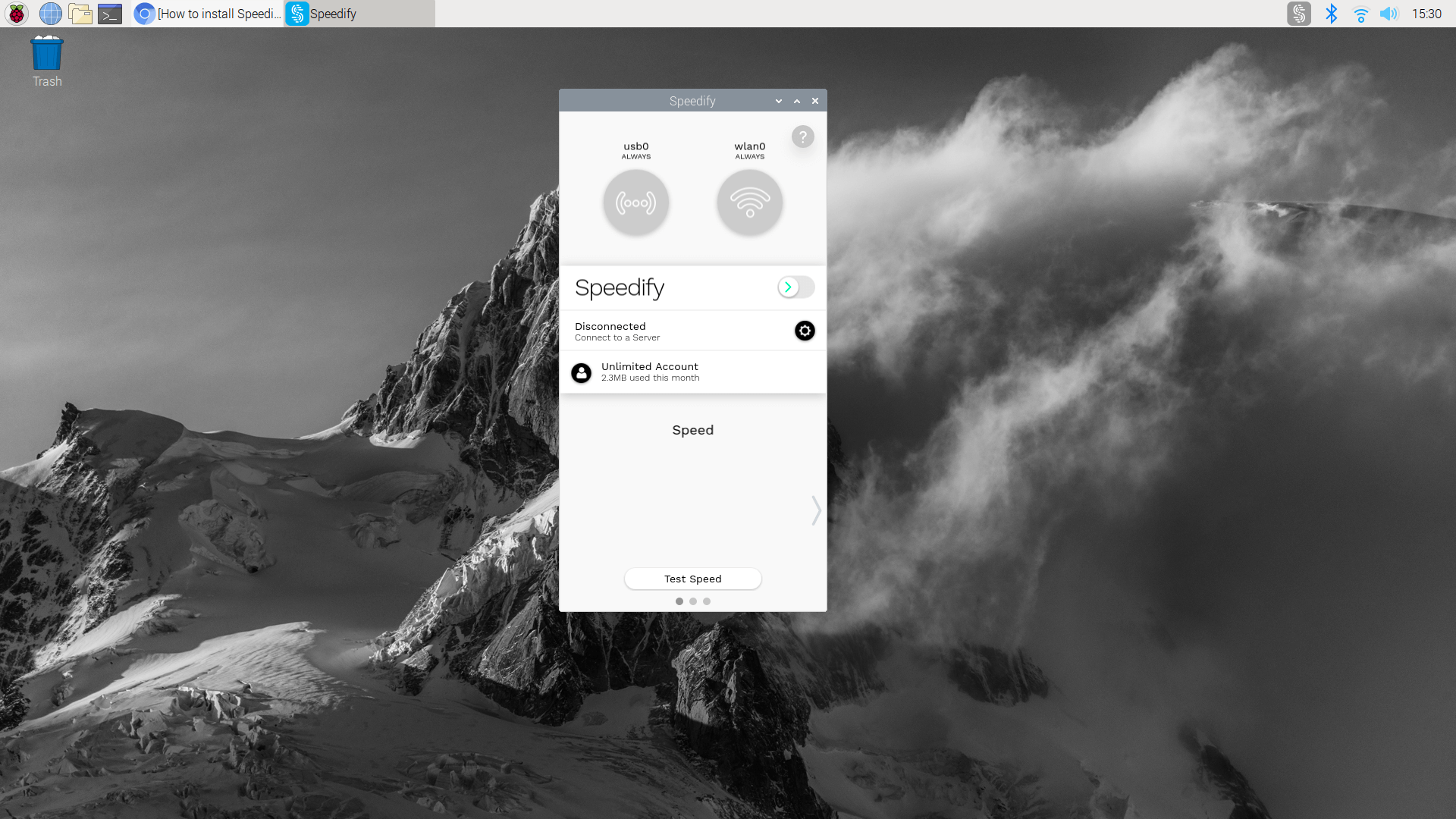
Sign in with your Speedify account (Linux needs a paid plan; the free tier does not cover Linux), then flip the switch to connect.
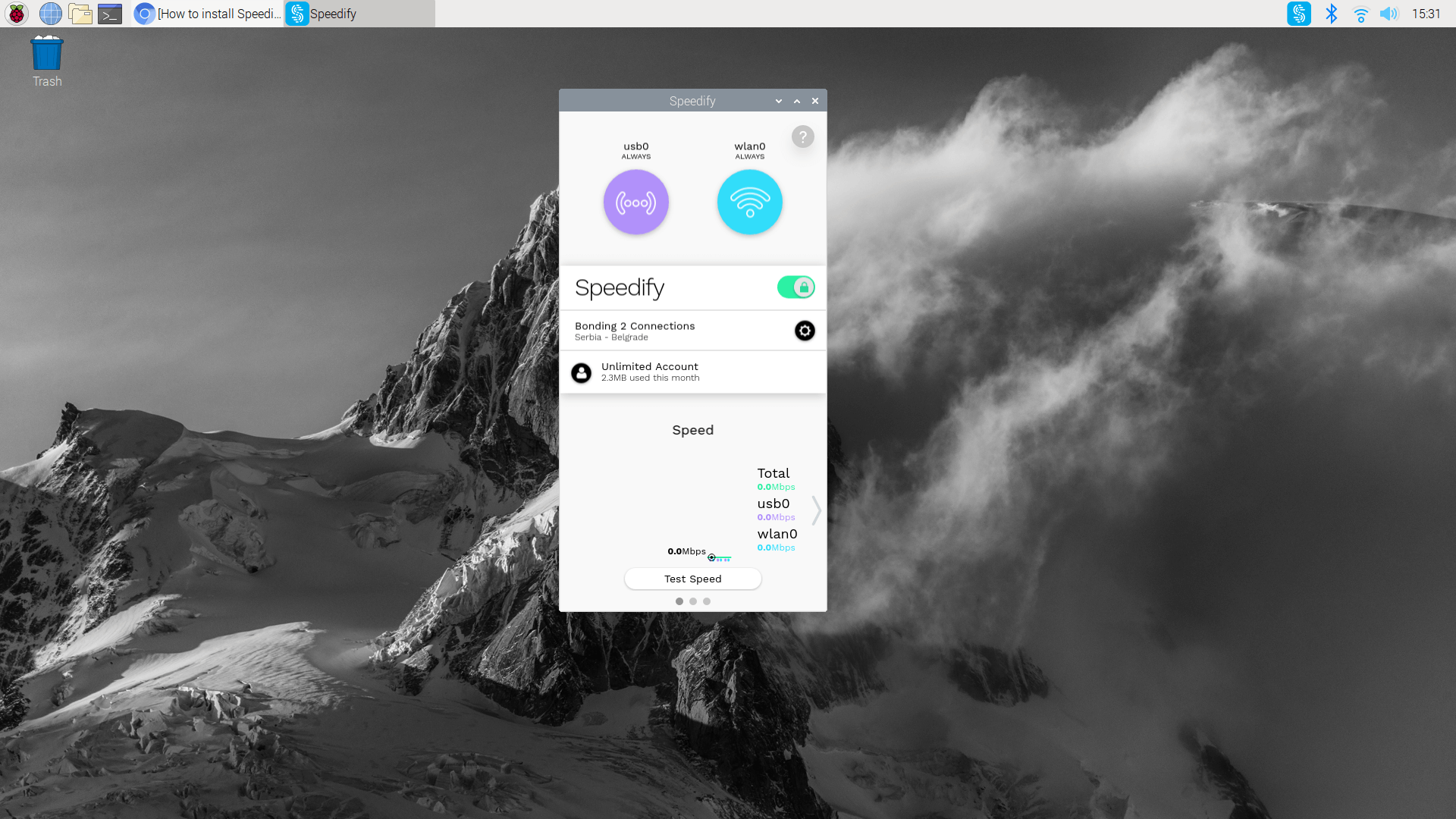
How to Check That Speedify Combines Internet Connections on a Raspberry Pi
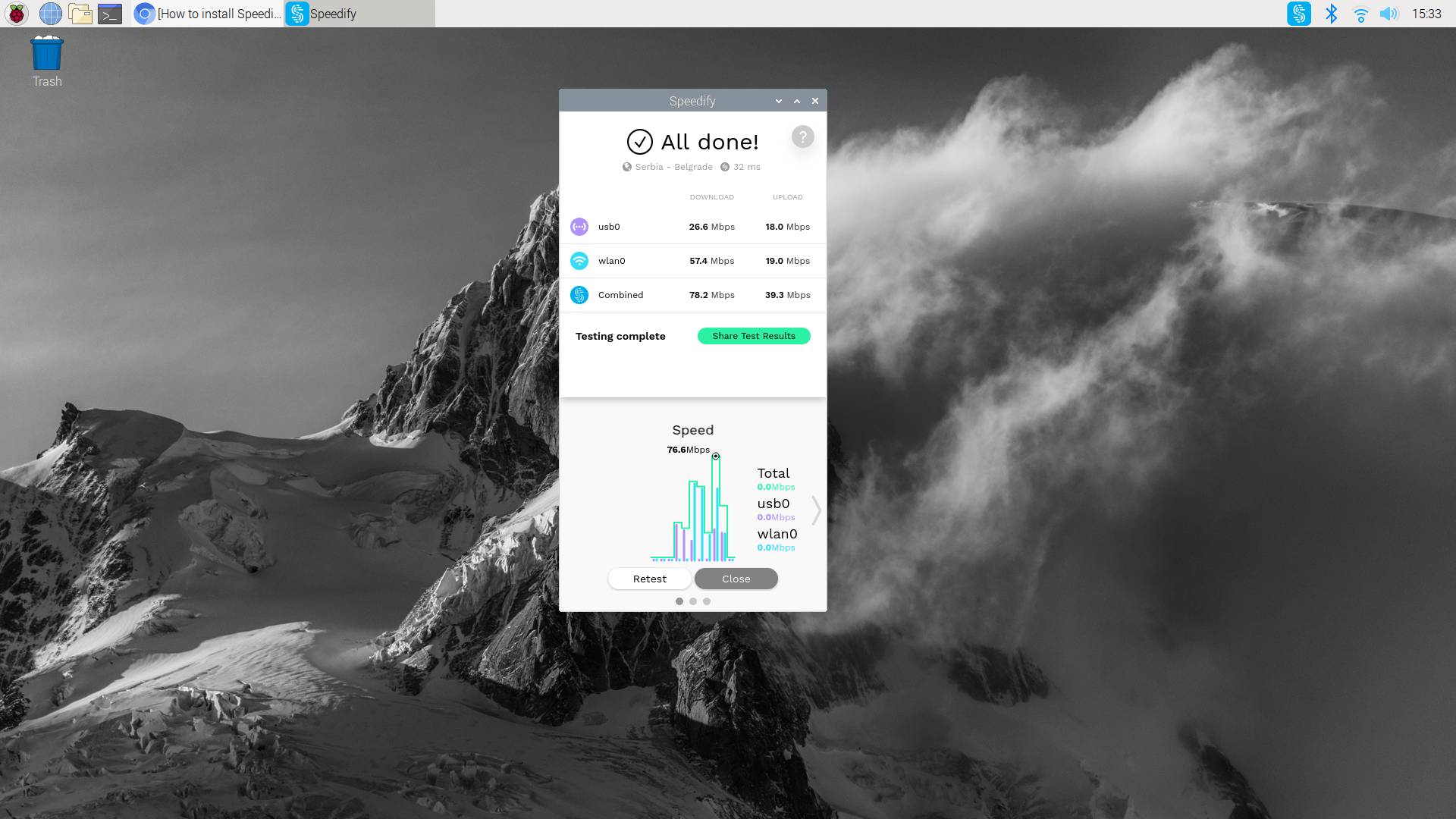
Run the speed test built into the Speedify app with one internet connection connected, then again with both. The second result should be higher, because both connections are carrying traffic.
Share the Combined Speedify Connection from a Raspberry Pi
You can use this setup as is, or share this combined VPN connection to a router via wired Ethernet so every device on the network gets the faster, more reliable and encrypted connection.
If ad blocking, privacy and faster uploads and downloads on a Raspberry Pi sound useful, give Speedify a try. Linux needs a paid plan; the same account also covers your Windows, macOS, Android and iOS devices, up to 5 at once on the Individual plan.
Speedify
Get started with Speedify today.
Speedify combines Wi-Fi, 4G/5G cellular, Ethernet, Starlink and satellite into one faster, more reliable internet connection. Free to try: 5 GB a month with a free account. No credit card required.
🚀 Speed
Faster uploads and downloads, because Speedify uses all your internet connections at once.
📶 Stability
If one internet connection drops, Speedify moves your traffic to the others in milliseconds.
🔒 Security
AES-256 encryption on every internet connection, on any network you join.



15M+ downloads worldwide. 75K+ five-star reviews on iOS and Android.