

Is Ethernet Better Than Wi-Fi?
When it comes to Wi-Fi vs Ethernet, each has its own advantages and disadvantages:
- Wi-Fi allows for greater mobility and convenience when using your device since it provides wireless internet access.
- Ethernet wired connections offer faster, more reliable internet speeds and lower latency than Wi-Fi.
In this article we will discover when it's best to use Wi-Fi and when you're better off with Ethernet.
Use Speedify to increase your upload and download speeds: combine internet connection sources like Wi-Fi, 4G, 5G, Starlink and wired broadband

Combine Wi-Fi, 4G, 5G, Starlink and wired broadband to fix slow upload and download speeds
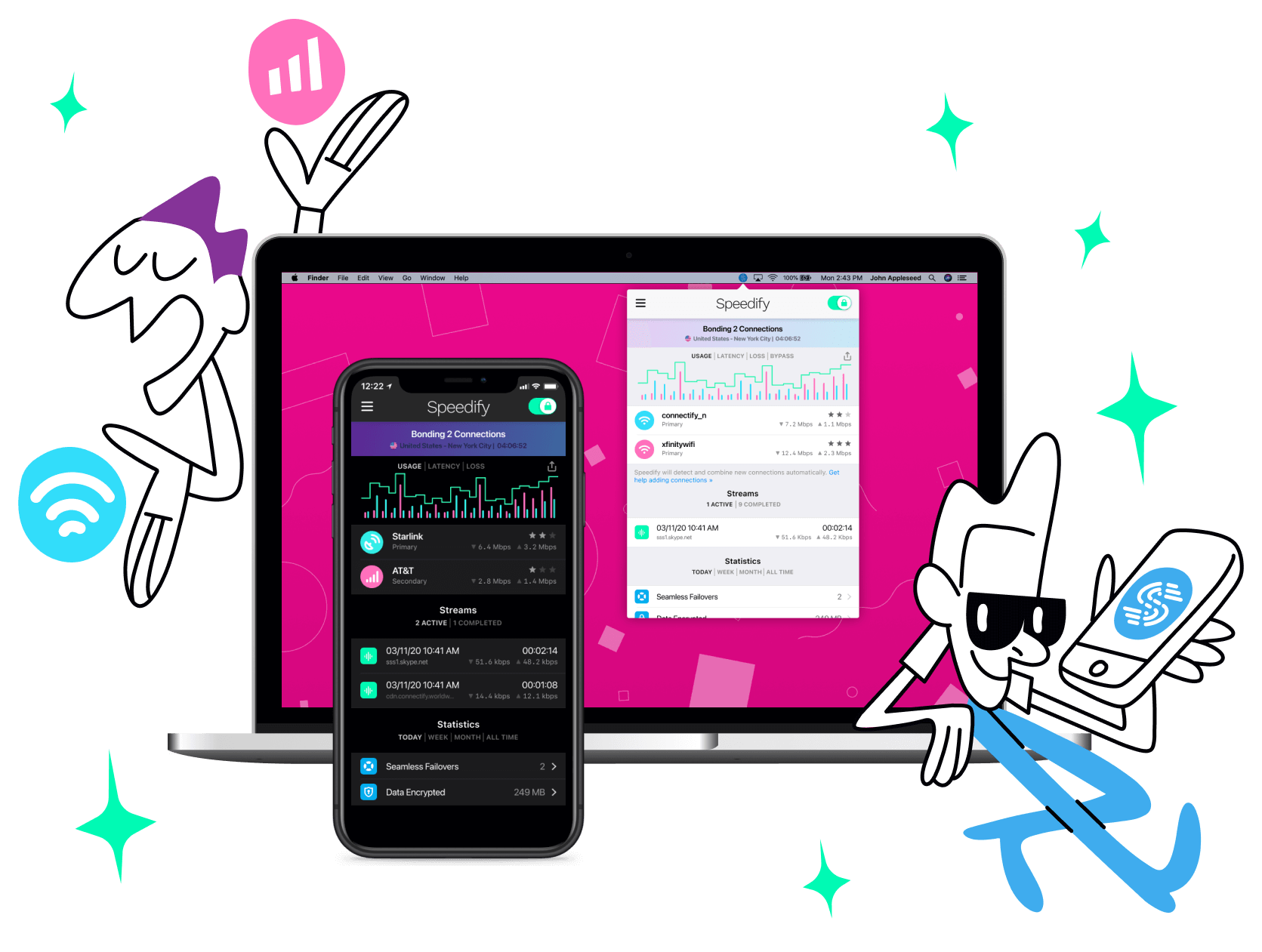
Speedify is the only app that seamlessly combines all of your connections, including Wi-Fi, 4G, 5G, Ethernet, and Starlink, into one stronger connection to keep you online and secure.
In most cases, Speedify will automatically detect and start using any available Internet connections on your device while intelligently distributing your online traffic between them for optimal performance. If you need help we have quick start guides available for most common set ups.

Combine personal hotspots for better upload and download speeds
Speedify's Pair & Share feature enables you to connect to multiple hotspots at the same time and wirelessly share LTE, 4G, and 5G cellular connections back and forth between multiple Speedify users on the same local network to create a faster, more reliable connection for everyone.
For the first time, it's possible to share cellular data between multiple devices, including PCs, Macs, iPhones and Androids. Use multiple phones as hotspots for internet access and get increased bandwidth and mobile failover for all paired devices.
Use Speedify to combine...
Combine these connections on:


Wired Ethernet = Reliabile Connectivity
Although we live in a world where almost every square foot is covered by some sort of a wireless network, either cellular, Wi-Fi or of another kind, Ethernet connectivity still has its benefits to the real world user:
- Consistent speeds: wired Ethernet connections don’t fluctuate like Wi-Fi. Data flow remains solid from end to end. For example, a CAT 6A cable supports 10,000 Mbps (10 Gbps) over 100 meters (328 feet).
- Low latency: compared to Wi-Fi, Ethernet has significantly lower latency. Latency matters for real-time applications like online gaming and video conferencing, where every millisecond counts.
- Higher security: thanks to its physical connection, wired Ethernet is more secure, making it harder to hack or interfere with than a wireless network connection like Wi-Fi.
Some of the most obvious downsides of wired Ethernet are:
- Cluttered setup: again, due to its wired nature, you have to plan for routes for the wires through your home, office or studio, linking the modem(s) / router(s) with your devices.
- More expensive: for a wired Ethernet setup the cost can be higher if you add all the cables, fixtures and other needed physical components when installing the whole network where you need it.
Wi-Fi = Mobile and Convenient Connectivity
I used a Wi-Fi internet connection when writing this article, and I was able to sit on my couch and then in the yard with my laptop. Wi-Fi is almost everywhere - it's the most popular connection type for internet at home as almost every router is wireless as well. So - here are the benefits of using a Wi-Fi connection:
- Mobility: Wi-Fi is available nearly everywhere and allows mobility. You can stream music or watch Netflix on your laptop or tablet while moving around.
- Convenience: there's no need for cables on Wi-Fi connections, which is ideal for portable devices and even devices that support Wi-Fi, like smart TVs.
- Accessibility: Wi-Fi is supported by all new household devices that have access to the internet.
On the other hand, there are also some short comings to using Wi-Fi, which you might encounter depending on what you're doing online:
- Inconsistent and slow speeds: the wireless signal is more susceptible to being obstructed and, thus, being unreliable from the point of view of internet speeds. If the Wi-Fi signal has to pass through multiple walls, its performance will significantly drop, especially for the 5 GHz wireless band. Also - when living in a residential area, there are many Wi-Fi networks around you, so, they will interfere with each other, generating performance issues.
- High latency: the Wi-Fi connection involves some extra steps related to transmitting the wireless signal that adds some milliseconds to the latency count. Plus - if the signal is obstructed, that's another jump for the overall ping of the connection.
- Dropped connections: you've all encountered this - at the edge of Wi-Fi the signal becomes inconsistent and even though your device shows that you have one or two bars of Wi-Fi signal, it's virtually unusable.
When Is It Better to Choose Wi-Fi and Ethernet?
Generally speaking, Wi-Fi would be best for every use case, except when you need a reliable connection - in this case it's better to use a wired Ethernet connection, if available.
Real world situations for using Wi-Fi include:
- when you're on the move
- when you're working remotely
- when you're streaming music / videos.
Ethernet is best used when:
- live streaming online
- gaming online
- transferring large files online quickly.
What If Wi-Fi or Ethernet Is Not Enough? Use Them Together at Once
There are situations when neither wired Ethernet nor Wi-Fi is reliable enough. If both of them come from the same internet service provider and they have issues, then you won't get the performance you need.
This is critical when you're live streaming, playing games online or working remotely and participating in conference calls. You can't afford to lose connectivity or have high latency / low speeds.
In this case, you can use Speedify, the only app that combines all of your internet connections to keep you online when it matters most. In this case, you can combine your wired Ethernet connection with you Wi-Fi connection for a faster, more reliable and secure connection. For best results, the two networks have to come from two different providers, so that if one of them fails, at least the other will keep you online with Speedify.


Speed
Stability
Security
Speedify devs love talking tech on YouTube, Tiktok, and Instagram!
Alex Gizis and the Speedify devs discuss and explain technology including Starlink satellites, Wi-Fi 7 routers, Apple networking features, fiber optics, broadband internet, 5G mobile networks, AI, networking protocols, and much more. Follow Speedify on YouTube, TikTok, Instagram, and LinkedIn!
Alex and the Speedify team are always exploring the latest in networking and security technology—like 5G, 6G, WiFi 7, laser and satellite internet—and sharing it in new discussion content across YouTube, TikTok, Instagram, and LinkedIn every week.
Got a tech question? Let's go deeper! Pop into Speedify Office Hours live every Wednesday at 10 AM Eastern. Speedify CEO Alex Gizis and our network engineers are standing by to break down your questions about networks, tech updates, and Speedify features.