
Starlink Outage or Service Down? Combine Starlink with Other Connections to Get Faster, More Reliable Internet
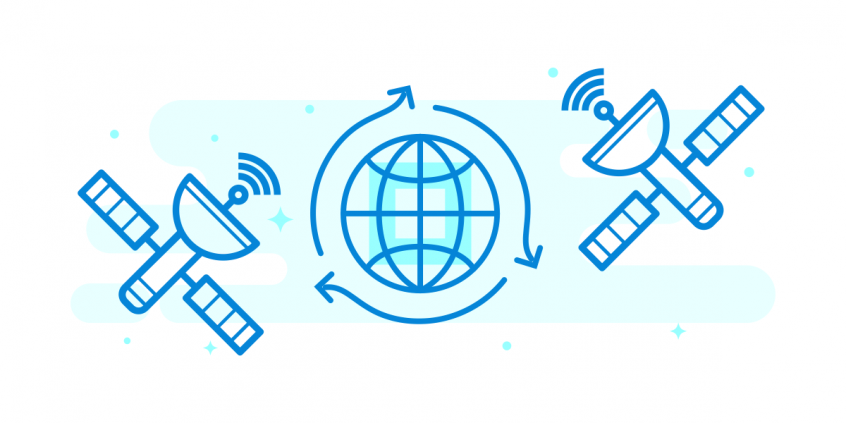
The Starlink constellation made out of thousands of small satellites orbiting the Earth works in conjunction with ground transceivers offers broadband Internet in remote areas especially.
As with any Internet connection, Starlink is also prone to issues such as slow speeds and disconnects. This article will help you understand how Starlink works, why you might encounter slow speeds and unreliable connection and how to avoid such issues.
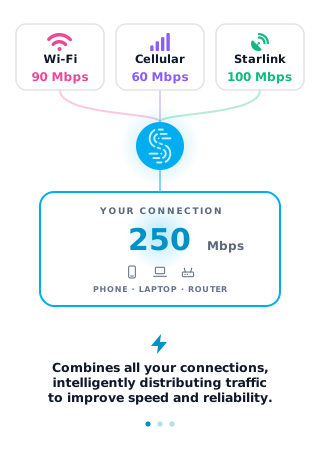
Speedify bonds Starlink with cellular or cable — so you get both connections' speed at once.
From 6,228 Starlink users on Speedify, 71% ran at least one other connection alongside Starlink. Cellular is the most common addition — and with Speedify bonding, you get the combined bandwidth of both.
Typical bonded speed gains
Understanding SpaceX Starlink – How It Works
As mentioned above, Elon Musk’s project works by establishing a communications network between:
- satellites – planned to be deployed over 42,000 in the next few decades.
- dedicated ground stations (relays), which are linked between them through optical fiber connections
- user terminals.
Once a critical mass of the constellation is deployed, according to the initial project, satellites will be able to communicate between them directly using lasers, thus needing fewer dedicated ground relays. This is very important for minimizing the latency of the Starlink Internet connection and maximizing the speeds. As you know, one of the pitfalls of satellite Internet connections has always been high latency times.
This website, unaffiliated with Starlink, centralizes community based Starlink stats from around the world. Here are some interesting numbers, as of April 2025:
- average ping: ~33 ms
- average download speeds: 152 Mbps
- average upload speeds: 18 Mbps
Current status as of April 2025: Starlink has deployed more than 6,750 satellites into orbit. The service is available in Australia, North America, most of South America, most of Europe, some countries in Asia and some in Africa. Many others are set to be available soon.
Potential Causes and Solutions for Starlink Connection Issues
We all know the symptoms for connectivity problems. It all starts with slower Internet speeds. Then, it can become unreliable, disconnecting randomly. This is best seen when streaming video or live streaming to your audience – the video will start stuttering, then it goes into “buffering mode”. The last stage is disconnecting altogether.
Before we dig into the potential causes and solutions – we are assuming that current Starlink users are situated within coverage of the satellite constellation. Here are some potential causes for Starlink connection issues, together with some suggested solutions:
|
Potential Cause |
Solution |
|
Improper setup of the user’s antenna / receiver |
>> Set up your Starlink Internet connection according to the installation instructions in your kit >> If your Starlink is not the tallest object in sight at the install location, download the Starlink app to ensure you will have a clear field of view before you install. This is important as even small obstructions (single tree, pole, etc.) can interrupt your service. |
|
Starlink is down or is experiencing issues |
>> Check if there are any reported outages. Make sure you follow SpaceX on social for latest updates. |
|
Bad weather – storm, rain, cloudy skies |
>> Use your backup Internet connection until conditions are better |
|
Faulty router / modem / device |
>> Restart your router / modem / device >> Make sure you’re connected to the right hotspot / Internet connection |
As you can see, it’s generally a good idea to have a second connection available, in case you have any Starlink connection issues. This can be the cellular data on your smartphone or external USB dongle, a nearby public Wi-Fi connection or any type of connection you might have around.
The problem with using a backup connection is that you’ll break your current session. Even if you keep the second connection active on your compter or smartphone, that device will not use both Starlink and the backup connection together at once. If you’re doing a bandwidth intensive latency sensitive activity such as live streaming video or gaming, you can kiss that session goodbye. You’ll have to reconnect using your backup Internet. And then, when Starlink is working, reconnect to it again.
We’ve got a solution for this too: using a link aggregation / channel bonding app like Speedify.
Speedify Provides Secure Seamless Failover to Avoid Starlink Connection Issues
Speedify is the only app that can combine multiple internet sources into one bonded super-connection for more stable and secure live streaming, video calling, and web browsing. Using Speedify to combine your Starlink Internet with a secondary / backup connection is the best idea for fast, uninterrupted Internet. Here’s how it works:
- Speedify uses channel bonding technology to combine 2 or more Internet connections together at once.
- It creates a “super-pipe” out of the Starlink and backup connection. This will maintain the session when one of the component connections fails. Do not confuse this with switching between connections – it’s much more than that.
- If the Starlink connection fails or is slower, Speedify will automatically direct more or all traffic to your secondary / backup connection so you get the best speed and stay online.
- Speedify automatically recognizes streaming activities and prioritizes them over other types of traffic.
You can even use Speedify with Starlink alone, without any secondary connection. That’s because it includes strong error correction algorithms that will optimize your Starlink connection by minimizing its packet loss rate.
As a bonding VPN, all your traffic will be secured by Speedify’s advanced encryption. This will protect your online privacy and sensitive data from hackers and cyber criminals.
The future looks promising for Starlink. In fact, according to Business Insider, Elon Musk wants to also make Starlink available for ships, planes, trucks ad RVs. All these scenarios, along with the “classic” fixed location one, require a seamless way to stay connected online. That’s what Speedify’s for!
Speedify
Get started with Speedify today.
Combine Wi-Fi, 4G/5G cellular, Ethernet, Starlink, and more into one faster, steadier connection. Free to try — no credit card required.
🚀 Speed
Faster uploads and downloads by bonding all your connections at once.
📶 Stability
Automatic failover in under a second when any connection drops.
🔒 Security
AES-256 encryption on every connection, on every network you join.


15M+ downloads worldwide. 75K+ five-star reviews on iOS and Android.