
Telehealth Zoom Working? Solve Connectivity Issues for No Dropouts or Buffering
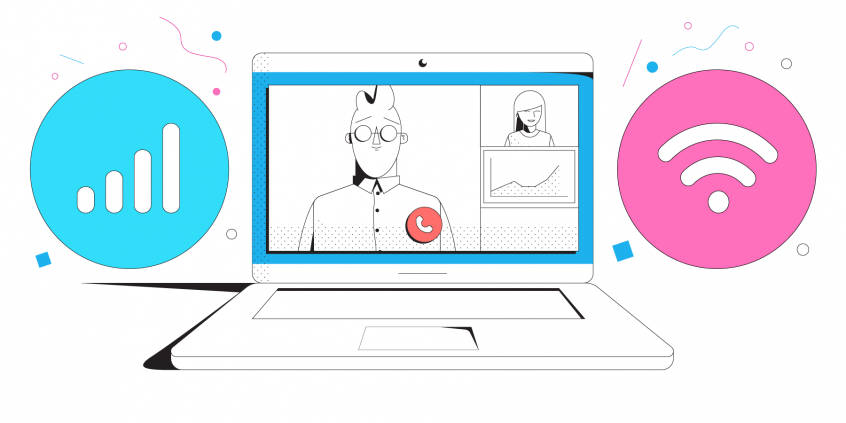
A telehealth appointment is the worst place for a video call to freeze, and the cause is almost never the clinic’s software. Home Wi-Fi dips for a few seconds, and those gaps where data does not arrive are what you hear as robotic audio and see as a frozen picture.
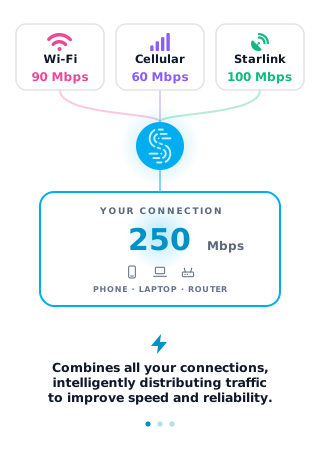
Speedify is an app that sends your traffic over Wi-Fi and 4G/5G cellular data together instead of leaning on one line, so a dip on one does not end the visit.
What follows is a plain look at why these calls break up, the checks to run before you join, and how using Speedify keeps the appointment going.
Speedify keeps the call running when the internet connection fails
Reasons for Zoom for Telehealth Internet Problems
As mentioned before, if you’re holding medical examinations with Zoom for telehealth, you need a fast and stable Internet for best results. Unfortunately, things can go wrong when you’re least expecting:
- your home ISP can do maintenance work, so the Internet might be very slow, if not disconnect altogether.
- your Wi-Fi router and/or modem can have temporary issues.
- if you’re using mobile data Internet, there might be an issue with the cell tower. Or you might have gone over your data plan for 4G / 5G speeds.
Whatever the cause, it’s frustrating that most of us can’t trust our Internet connection while being in a medical consultation. Unless we fix this…
Zoom Telemedicine Visit? Here’s How to Get Stable and Fast Internet
You might think that restarting your Wi-Fi router / modem could help. It can, but for how long? Calling your ISP could also help in reporting an issue, but how long will it take them to fix the problem? And can they guarantee that it won’t happen again?
Solution 1: Get a dedicated (business) plan from your ISP. Of course, if you have the budget and your ISP can offer that. But that can be costly and you’d still be dependent on one Internet service provider.
Solution 2: Get an extra Internet connection from a different ISP. Preferably from a different source type, meaning that if you already have cable Internet, try to get a cellular plan. Or if you have satellite Internet, at least go for DSL. Oh, and you have to think about a fast solution to switch between these connection, should one of them fail. Otherwise, you’ll still be disconnected from telehealth sessions…
Solution 3: Use Speedify bonding VPN – it really works. The special thing about Speedify? It’s the only app that can combine multiple internet sources into one bonded super-connection for more stable and secure live streaming, video calling, and web browsing. So, regardless of what happens, as long as one of those connections is up and running, you’ll be online.
Focus on Your Telehealth Visit, Not on Troubleshooting the Internet
Speedify does much more than load balancing (switching between connections): channel bonding. It can use all the connections at the same time. And will intelligently reroute traffic to the working connection(s) before any of them stop working. You won’t even know something happened – your video calls and streaming will go on uninterrupted.
What about data security while working from home? When working remote, data security is very important, as you’re accessing company data. You wouldn’t want that to fall into the hands of the competition. The best part with Speedify being a bonding VPN is it also encrypts traffic going in and out of your device. Your sensitive company data will be safe from hackers and cyber criminals.
So, with no false modesty, Speedify is an essential connectivity tool for Zoom for Telehealth. It’s available for individual use on up to 5 devices on all major platforms (Windows, macOS, Android, iOS, Linux). But there’s also Speedify for Teams, with more add-ons, such as dedicated servers.
Speedify
Get started with Speedify today.
Combine Wi-Fi, 4G/5G cellular, Ethernet, Starlink, and more into one faster, steadier connection. Free to try — no credit card required.
🚀 Speed
Faster uploads and downloads by bonding all your connections at once.
📶 Stability
Automatic failover in under a second when any connection drops.
🔒 Security
AES-256 encryption on every connection, on every network you join.


15M+ downloads worldwide. 75K+ five-star reviews on iOS and Android.