
Get Better Upload Speeds by Combining Multiple Internet Connections Together with Speedify – like Starlink, 4G / 5G Cellular, Wi-Fi, DSL, etc.
A good upload speed for streaming is about double what the video needs: send 1080p at a bitrate (the data each second of video uses) of 6 Mbps, and you want about 10 Mbps of steady upload. Headroom matters more than a big number, because home and mobile internet connections dip.
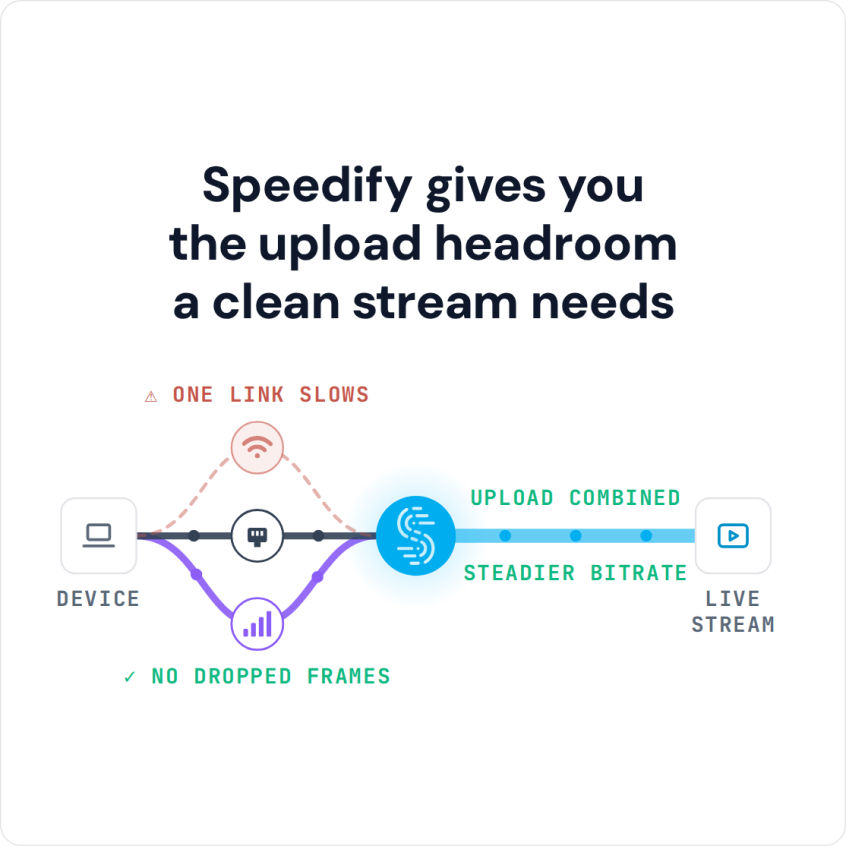
Speedify is an app that runs a stream over Wi-Fi, 4G/5G cellular, wired Ethernet, Starlink and other internet connections together, adding their upload speeds and covering the dips. Combining needs two or more internet connections: on a single connection, Speedify works as an encrypted VPN and cannot add upload speed. Inside you will find whether 10 Mbps is enough, which internet connections suit broadcasting, and seven steps to reach the upload speed you need, the last of them with Speedify.
Speedify gives you the upload headroom a clean stream needs
10 Mbps Upload Is Good for Streaming 1080p
10 Mbps of upload is good for streaming at 1080p. Twitch recommends 6 Mbps for 1080p at 60 fps, which leaves about 4 Mbps of headroom. 7 Mbps covers 720p at 60 fps or 1080p at 30 fps (4.5 Mbps on Twitch) with a little to spare. Under 5 Mbps, stay at 720p at 30 fps (3 Mbps on Twitch).
Internet speed is measured by the download / upload pair of parameters. When service providers advertise their plans, they most likely share the download speed. That is important in general for activities such as:
- web browsing
- watching videos online, including streaming videos on platforms such as Netflix, Hulu, BBC, etc.
- file transfers.
When you’re into live streaming, the most important indicator for you is the upload speed the ISP can provide. Here are the recommended Internet upload speeds for live streaming on major platforms:
|
Resolution |
Twitch | YouTube | Facebook Live |
| HD 720p 30fps | 3 Mbps | 1.5 – 4 Mbps | 1.5 to 4 Mbps |
| HD 720p 60fps | 4.5 Mbps | 2.25 – 6 Mbps | 2.25 – 6 Mbps |
| FHD 1080p 30fps | 4.5 Mbps | 3 – 6 Mbps | 3 – 6 Mbps |
| FHD 1080p 60fps | 6 Mbps | 4.5 – 9 Mbps | 4.5 – 9 Mbps |
| QHD 1440p 30fps | 6 – 13 Mbps | ||
| QHD 1440p 60fps | 9 – 18 Mbps | ||
| 4k 2160p 30fps | 13 – 34 Mbps | ||
| 4k 2160p 60fps | 20 – 51 Mbps |
Just remember that these speeds are for the live stream only. You will use the same internet connection for other things during your live streams (browsing, chatting, watching videos), so add at least 50% to the recommended upload speed above.
Internet Connection Types for Streaming: Typical Upload Speed and Latency
The connection you need depends on where you want to live stream from and what services you have available to you. Below is a brief general guide on connection types and their upload speeds / latency performance. You can get an idea of what to shoot for when you’re asking yourself what upload speed you need to live stream. Please confirm with the Internet service providers in your area the available upload speed and typical latencies.
| Connection type | Typical upload speed | Typical latency | Recommended resolution for live streaming |
| Fiber Optic | 250 to 1,000 Mbps | Lowest | Up to 4k @ 60 fps |
| Cable | 5 to 50 Mbps | Low | Up to 4k @ 30 fps |
| DSL | 1 to 10 Mbps | Low | Up to 1080p @ 30 fps |
| Cellular (4G / LTE) | Variable, up to 20 Mbps | Low | Up to 1440p @ 30 fps |
| Satellite | Variable, up to 38 Mbps | Highest | Up to 1440p @ 60 fps |
Learn more about Fiber vs. cable vs. DSL.
See typical cellular upload speeds.
Check out user reports of Starlink speeds.
7 Steps to Get the Best Upload Speed for Live Streaming
Here are some tips you should follow to get the upload speed you need to live stream:
- Test your connection speed. Look at the upload speed. Is it enough for the video quality you want to stream at?
What to do: if the upload speed is lower than your contract promises (read the fine print as well), contact your ISP. If the plan itself is too slow, upgrade to a faster plan. - Make sure your ISP doesn’t throttle your upload traffic / streaming traffic.
- Check for data caps in the contract. As you’re live streaming, you’re using a lot of traffic. When you hit those caps, the download / upload speeds could significantly drop.
- If possible, always use wired connections when live streaming. This eliminates wireless interference and packet loss.
- Make sure no other devices on your network use the Internet upload bandwidth. This includes computers or mobile devices running backups or video calls at the same time when you’re live streaming.
- Use up-to-date network equipment (routers, cellular adapters, etc.) and drivers, if you’re live streaming from your computer. An older, not updated router may be the cause for low upload speeds and high latencies.
- Use all available internet connections at once. Besides your home or studio connection, you can tether a phone, use mobile hotspots or get a second connection installed: these are all options you can take into account. To use them together, you need an app that combines them, such as Speedify.
Speedify Helps You Get the Upload Speed You Need to Live Stream
Speedify can combine multiple internet sources into one connection for more stable and secure live streaming, video calling and web browsing. Speedify splits traffic across every connection at once and protects it with advanced encryption.
Here’s how Speedify helps streamers everywhere get the best connectivity:
- evaluates your Internet connection and recommends a supported video quality for your live stream.
- prioritizes live streaming over other types of traffic.
- aggregates the upload speeds of the combined connections, which allows live streaming at higher quality and higher frame rates.
- sends each packet over every connection in Redundant Mode and uses the first copy to arrive, so latency follows the faster connection.
- minimizes packet loss by automatically resending lost network packets, which helps on wireless connections such as Wi-Fi and cellular.
Connection priorities let you set cellular and other metered connections to Secondary, so Speedify leans on wired and Wi-Fi connections first. If one of your connections drops, Speedify moves the live streaming traffic to the other working connections and keeps the same public IP, so the stream stays on the same session.
Speedify
Get started with Speedify today.
Speedify combines Wi-Fi, 4G/5G cellular, Ethernet, Starlink and satellite into one faster, more reliable internet connection. Free to try: 5 GB a month with a free account. No credit card required.
🚀 Speed
Faster uploads and downloads, because Speedify uses all your internet connections at once.
📶 Stability
If one internet connection drops, Speedify moves your traffic to the others in milliseconds.
🔒 Security
AES-256 encryption on every internet connection, on any network you join.



15M+ downloads worldwide. 75K+ five-star reviews on iOS and Android.