
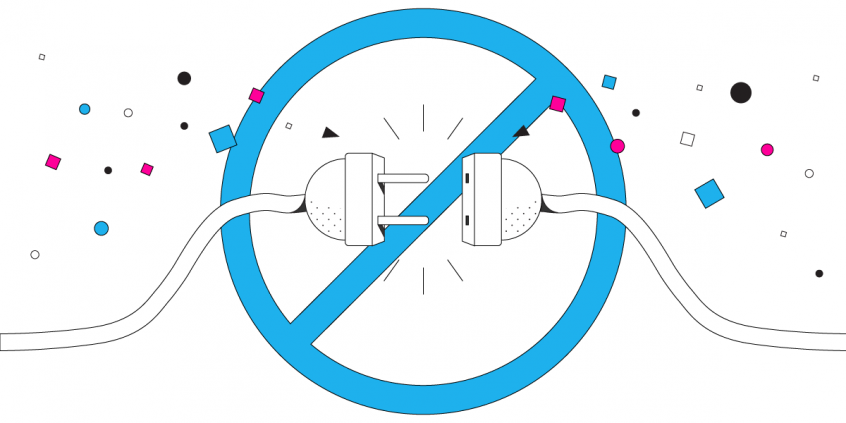
You Can Combine Multiple Internet Connections Together – Like Starlink, Wi-Fi, 4G, 5G, and DSL – with Speedify, to Fix Zoom Meeting Disconnecting on Android
On an Android phone, Zoom drops out most often when the phone moves the call from Wi-Fi to mobile data, or from one cell tower to the next, and the meeting cannot survive the gap.
Speedify is an app you install on Android that uses Wi-Fi and 4G/5G cellular data together at the same moment, so that changeover no longer knocks you out. Read on for the reasons Zoom keeps disconnecting on Android phones and tablets, plus what using Speedify means in practice – Zoom calls that hold together while you move around.
Speedify keeps your call running when the connection under it fails.
Why Zoom Meeting Keeps Disconnecting on Android
One of the main causes of Zoom disconnects on Android devices is actually your connection to the Internet. When you have a slow, or unreliable connection, Zoom Meetings may not be able to work properly. Sometimes, you may not even realize that you have a Zoom connectivity problem until you try and use the service.
Zoom uses significant bandwidth, especially for video calls, as other video conferencing software. Your device is sending a complex set of data packets to the device of the person you are trying to talk to. And their device is sending packet of data to you.
The flow of these packets gets interrupted if your Wi-Fi connection has a momentary blip or your cellular connection fluctuates. It can take a few moments for the data to catch up.
This results in Zoom Meeting disconnecting on Android: calls where the audio cuts in and out, where the video lags, and where the audio and video don’t sync properly.
Issue – RESOLVED Zoom Meetings Disconnecting on Android
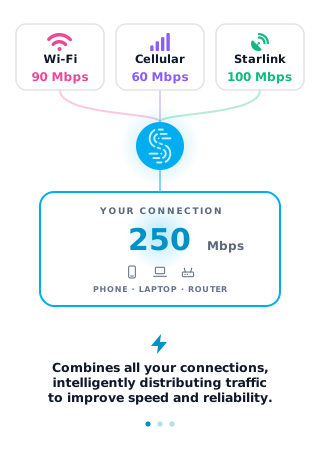
Speedify makes Zoom disconnects on Android disappear. The Speedify app works by monitoring the quality of your Internet connections in the background. It can bond your Wi-Fi and cellular connection simultaneously in a single “pipe” on your Android phone. Or combine any number of connections for that matter.
This improves your bandwidth and leads to a smoother Zoom conference meeting.
Speedify also routes data when something happens to one of your connections. When you stumble upon a bad Wi-Fi hotspot, or your connection suddenly goes out, you will stay connected. Speedify intelligently and automatically reroutes your data through the mobile data connection until you are connected again to both networks. Best of all, you don’t notice anything because Speedify works seamlessly.
Speedify is available for Android, iOS, macOS, Windows and Linux devices.
No More Zoom Disconnects on Android Phone! Enjoy Stable, Fast and Secure Zoom Meetings
Speedify does more than just manage your Internet connections. It is also a fast bonding VPN. It encrypts all of the data you send and receive from your device. This helps keep your private information and conversations secure from digital eavesdroppers and cyber thieves.
Speedify doesn’t just make your Zoom Meeting that keeps disconnecting on Android issues vanish. It also makes the Zoom app more stable and secure, and improves your overall Internet experience.
Other VPNs slow down your Internet connection. There is no other app that works like Speedify. Only Speedify gives you advanced encryption while also speeding up your Internet connection.
Fix Android Zoom disconnects easily with Speedify!
Root Cause Analysis: macOS Network Stack Limitations
Primary vectors for zoom meeting issues mac users encounter involve network stack limitations in single-connection scenarios. When operating with insufficient bandwidth allocation or connection instability, Zoom’s RTP cannot maintain QoS requirements. Power users often remain unaware of underlying connectivity degradation until application failure during critical sessions.
Zoom’s codec requirements demand sustained bandwidth, particularly for 4K streams and multi-participant conferences. The application maintains complex bi-directional data streams with strict latency requirements. macOS devices simultaneously encode outbound video/audio while decoding multiple inbound feeds—highly sensitive to network inconsistencies.
Network topology challenges arise when Wi-Fi connections experience momentary packet drops or cellular encounters tower handoffs. Transport-layer interruptions require multiple RTTs for congestion control recovery, resulting in observable quality degradation.
These limitations manifest as audio dropouts, video frame freezing, and A/V synchronization drift—symptoms familiar to Mac users managing professional video conferencing requirements.
What Leads to Zoom Crashing on iPhone?
Zoom meetings are extremely bandwidth-hungry and demand a lot from your Internet connection to work properly. A lot of data is being uploaded and downloaded at the same time. So, when determining why your Zoom connection isn’t stable, you should first look at your Internet connection. It might be that your Internet connection is too slow and doesn’t have enough bandwidth for a video call, or that the connection is spotty and experiencing a lot of “packets loss.” iPhone doesn’t have many connection options. You can either use your Wi-Fi connection or the 4G/5G cellular. These issues lead to dropped calls, low quality or choppy video and audio, and even Zoom crashing.
Now that we know what is causing the issue, let’s talk about solving it.
Speedify
Get started with Speedify today.
Combine Wi-Fi, 4G/5G cellular, Ethernet, Starlink, and more into one faster, steadier connection. Free to try — no credit card required.
🚀 Speed
Faster uploads and downloads by bonding all your connections at once.
📶 Stability
Automatic failover in under a second when any connection drops.
🔒 Security
AES-256 encryption on every connection, on every network you join.


15M+ downloads worldwide. 75K+ five-star reviews on iOS and Android.