
What Is Cellular Bonding?
Cellular bonding combines two or more 4G/5G cellular connections at once, ideally from different carriers, into one connection with their combined bandwidth, plus automatic failover if one carrier’s signal drops. You will also see it called bonded cellular: it is channel bonding, or link aggregation, using only cellular connections.
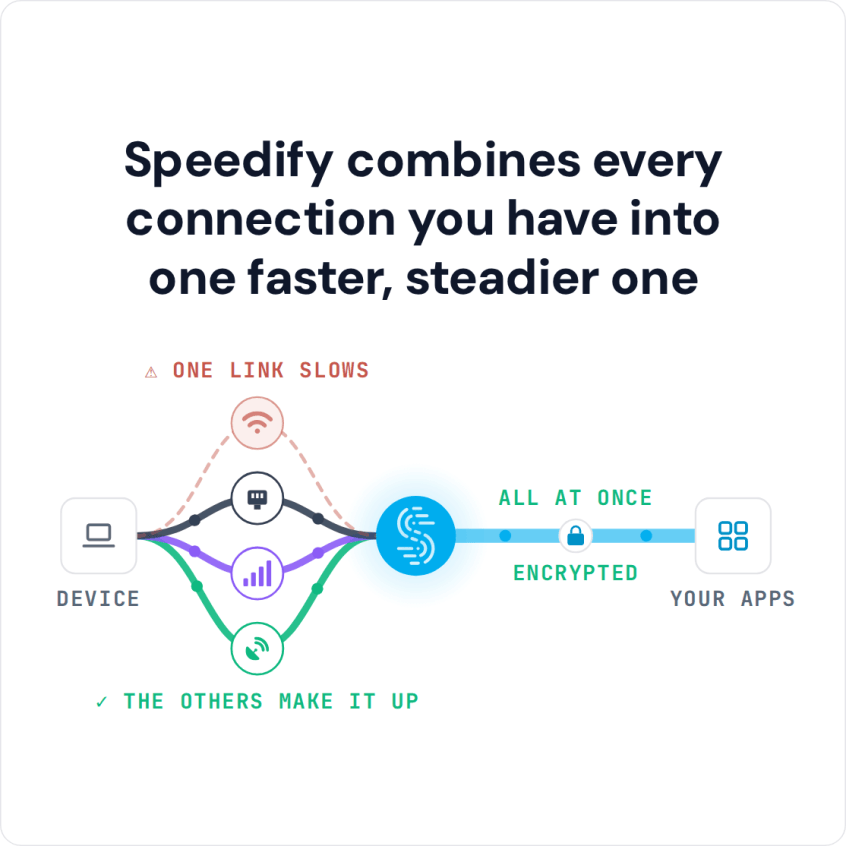
Speedify is an app that does cellular bonding in software: it combines Wi-Fi, 4G/5G cellular, Ethernet, Starlink and satellite internet connections at the same time for faster downloads and uploads, and keeps sessions running when one connection fails. Here is how cellular bonding works, where it is used, and how hardware and software solutions compare.
Speedify combines every connection you have into one faster, steadier one
How do I use WiFi and 4G/5G cellular at the same time with Speedify?

Pick your two internet connections and your device below and we'll take you to the step-by-step setup guide.

Benefits of Cellular Bonding
Combining cellular connections gives you three benefits:
- getting increased bandwidth.
- failover protection.
- having mobility.
How fast is bonded cellular internet? The answer depends on the connections you combine: 4G LTE, 5G, or even 3G or 2G in remote areas. Do not expect the combined connection to reach the full sum of the individual bandwidths. Every cellular bonding solution adds overhead, and efficiency varies by solution, because each one uses different algorithms tuned for specific jobs such as live streaming or file transfers.
Failover is where cellular bonding pays off. If one of the cellular connections runs into trouble, for example when you drive into an area with poor coverage, the hardware or software moves traffic off that modem and onto the connections that still work, and the session continues. Once the affected connection recovers, traffic flows over it again.
Cellular Bonding Use Cases: Live Streaming and Broadcasts and Remote Work
Cellular bonding gives you fast, reliable internet on the move, anywhere at least two carriers have coverage. Two groups benefit most:
Live streaming and broadcasting: for IRL streaming, events, sports or reporting from the field, a bonded cellular Internet connection keeps the stream up. No single connection is 100% reliable, and with two or more carriers the stream keeps going when one of them loses coverage.
Remote work: remote workers who spend most of the day in Zoom video calls, such as teachers, trainers and managers, need a stable connection to stay productive, and so do day traders.
Cellular Bonding Solutions Compared: Hardware Devices vs. Software
Cellular bonding solutions come in two types: dedicated hardware devices, and software that combines connections directly on a device you already own. Here’s an updated comparison of cellular bonding solutions.
Hardware solutions come from vendors such as Teradek, Peplink, Mushroom Networks and LiveU. Each is built around a central device that takes SIM cards or external USB cellular modems and combines them, and some are sold as “set it and forget it” boxes.
Speedify is a software-only solution. Instead of dedicated hardware, Speedify combines the connections directly on the device it runs on: a computer, a Raspberry Pi or a phone.
Hardware or software-only bonded cellular Internet: both deliver the same result, so compare them on three points:
- Flexibility: a cellular bonding solution should keep up with new protocols and features, such as the ability to wirelessly tether cellular devices to one another and share Internet back and forth between them. Speedify is software, so new features arrive as app updates, and traffic runs through fast cloud servers that sit between you and the rest of the Internet. There is no hardware to replace every few years.
- Value for money: hardware cellular bonding solutions cost $1,000 and up, and some also need a subscription to the vendor’s service, sold separately from the device.
Software costs a fraction of that, because there is no device to buy. Speedify is a subscription (the Individual plan is $89.99 per year), and teams can add a dedicated server for their own traffic. Either way, budget for the cellular data plans too: depending on how much data you use, each carrier costs from a few dollars to hundreds of dollars per month. - Security and online privacy: as software, Speedify adds encryption and carries the combined connections inside an encrypted tunnel, so the networks along the way cannot read your traffic. Speedify keeps no record of the sites you visit, and it can hide your browsing history from your internet provider.
Learn more about dedicated hardware vs. software-only bonding in this article.
Bonded Cellular vs. Satellite Internet: Combine Both Instead of Choosing
Bonded cellular needs coverage from at least two carriers. Satellite internet such as Starlink works where there is no cell coverage at all, but the dish needs a clear view of the sky, and trees or buildings interrupt it. Speedify combines Starlink or other satellite internet with 4G/5G cellular, so a cellular dropout or a satellite obstruction does not end the session.
Speedify Is Used on Millions of Devices Worldwide
Speedify has made internet connections faster and more reliable for businesses and individuals since 2014.
15M+
Speedify downloads worldwide75K+
5-star reviews for Speedify on iOS and Android82
Speedify server points of presence in 50+ cities on 6 continents500TB+
Of internet traffic carried by Speedify every weekSpeedify Partners
Speedify works with these companies to bring faster, more reliable internet and networking technology to their customers and employees.


Build Your Own Cellular Bonding Device with Speedify
You can use your computer, a mobile device or a device like a Raspberry Pi to create your own cellular bonding hardware powered by Speedify:
- Share cellular connections back and forth between Speedify users on the same local network with Speedify’s cellular sharing feature.
- Follow this guide to build your own Raspberry Pi router that combines internet connections.
- Use a Windows laptop to share a combined cellular connection over Wi-Fi.
- Here is how to share a combined connection over Wi-Fi on a Mac.
- Turn a Linux laptop into a cellular bonding device with Speedify.
Any device that runs an operating system Speedify supports (Windows, macOS, Linux, iOS, Android or OpenWrt routers) can become a cellular bonding solution. Routers need a Speedify Router License.
Speedify Adds the Security Layer to Cellular Bonding
Besides combining connections for live streams and failover, Speedify encrypts all of your traffic like a VPN, for privacy and security. A regular VPN encrypts traffic over a single connection and can slow it down; Speedify uses an improved protocol built for several connections at once, so the encryption does not slow you down the way it can with other VPN services.
Software Cellular Bonding vs. a Cellular Bonding Router: Where Software Wins
Hardware routers and software both handle use cases such as:
- IRL live streaming
- remote learning
- online and hybrid events, including wedding videography and concerts
- reporting from the field
- entertainment
- houses of worship.
But here’s where software cellular bonding stands out:
- Software is more versatile and portable than a physical cellular bonding router. Software is not tied to fixed bandwidths, and it needs no extra space, power source or equipment to get good results when live streaming or transferring files.
- Software costs less. Hardware-based solutions (Dejero, LiveU, Mushroom Networks, Peplink, Streambox, Teradek and TVU Networks) need an upfront hardware purchase, plus a subscription to the vendor’s cloud service. Speedify cellular bonding software charges only a monthly or yearly subscription.
- Software is more flexible. Instead of committing to dedicated hardware, you can turn any supported device into a machine that combines connections for live streaming, or even build your own router that combines internet connections and use it like a hardware device.
Looking for a real world use case? Read about Doug Piper’s decision to live stream beer tasting using Speedify after considering a LiveU setup.
Speedify Business Solutions
Speedify Teams
Speedify for Routers

Speedify Embedded Solutions and Integrations
Embed Speedify software into your app or hardware products and leverage the core channel bonding technology of Speedify in new and interesting ways.